If you are new to investing, you have probably heard people talking about SIPs everywhere — on YouTube, social media, or financial ads. But what exactly is a SIP, and why do so many people recommend it for beginners?
In simple words, a SIP helps you invest small amounts regularly instead of investing a large amount at once.
Let’s understand SIP in the easiest way possible.
What is SIP?
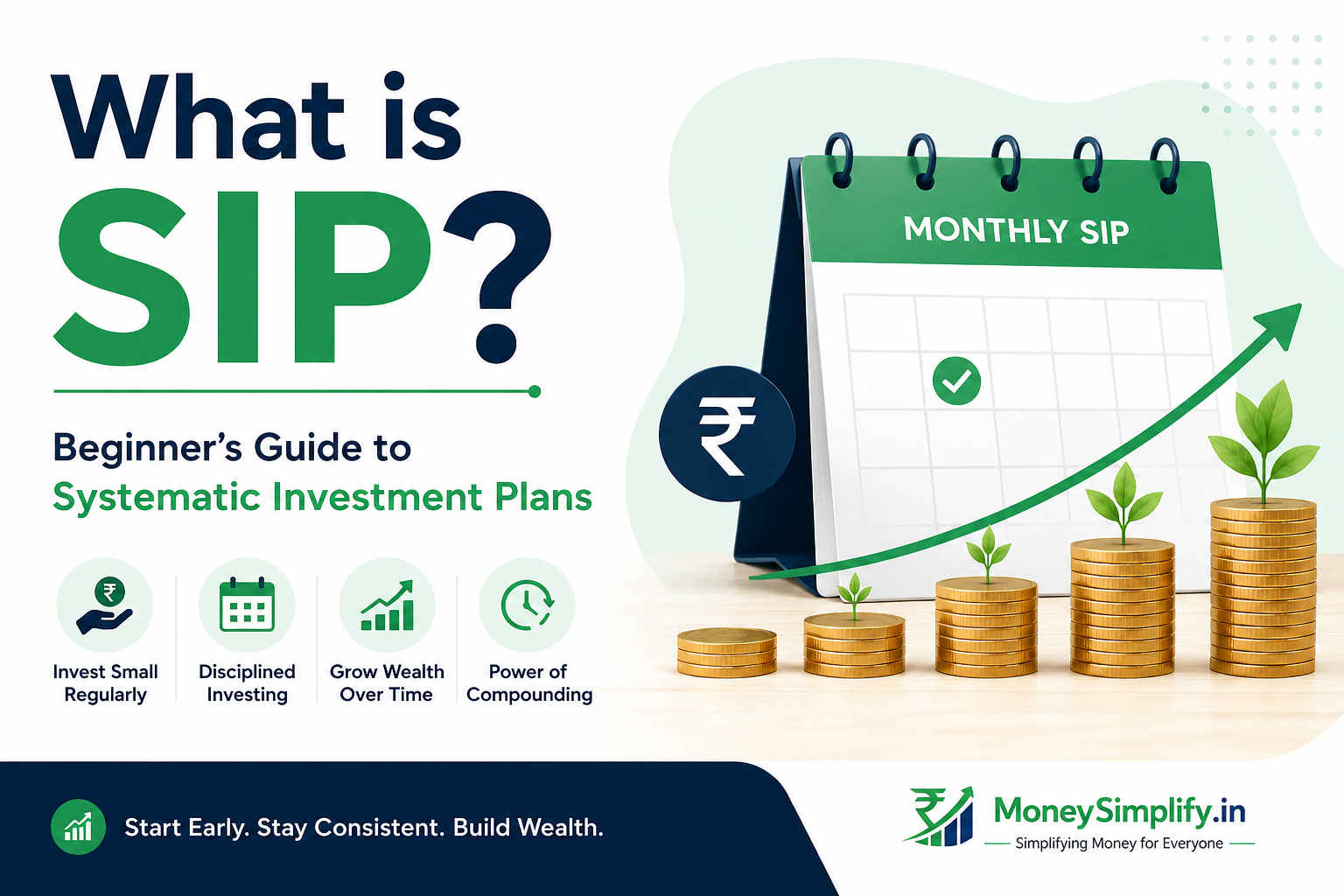
SIP stands for Systematic Investment Plan.
It is a method of investing money regularly into a mutual fund. Instead of investing a lump sum amount, you invest a fixed amount every month or at regular intervals.
For example:
- ₹500 every month
- ₹1000 every month
- ₹5000 every month
The amount gets automatically invested into your chosen mutual fund.
Simple Example of SIP
Imagine you decide to invest:
- ₹2000 every month
- for 10 years
Instead of waiting to save a huge amount, SIP allows you to start small and invest consistently.
Over time, your money may grow through:
- regular investing,
- compounding,
- and market growth.
This is one of the biggest reasons why SIPs are popular among beginners and long-term investors.
You can also use our SIP Calculator to estimate how your monthly SIP investments may grow over time.
How Does SIP Work?
Here’s how a SIP works step by step:
Step 1 — Choose a Mutual Fund
You select a mutual fund where you want to invest.
Step 2 — Decide SIP Amount
Choose how much you want to invest monthly.
Example:
- ₹500
- ₹1000
- ₹5000
Step 3 — Select SIP Date
You choose a fixed date every month.
Step 4 — Automatic Investment
The amount gets auto-debited from your bank account and invested into the mutual fund.
Why Do People Prefer SIPs?
SIPs are beginner-friendly because they:
- reduce the need for large investments,
- encourage disciplined investing,
- lower emotional investing decisions,
- and help build wealth gradually.
Benefits of SIP
1. Start With Small Amounts
You can begin investing with as little as ₹500 per month.
This makes investing accessible for students and salaried individuals.
2. Builds Financial Discipline
Since SIP invests automatically every month, it develops a habit of regular investing.
3. Power of Compounding
One of the biggest advantages of SIP is compounding.
Compounding means:
your returns can generate additional returns over time.
The longer you stay invested, the stronger the compounding effect becomes.
4. Reduces Market Timing Stress
Many beginners worry about:
- “When should I invest?”
- “Is market high right now?”
SIP helps reduce this stress because you invest regularly regardless of market conditions.
Is SIP Risk-Free?
No.
This is very important to understand.
A SIP is linked to mutual funds, and mutual funds are connected to market performance.
This means:
- returns are not guaranteed,
- markets may go up and down,
- short-term losses are possible.
However, SIPs are generally considered better for long-term investing because they reduce the impact of short-term market fluctuations.
SIP vs Saving Money in Bank
Many people simply keep money in savings accounts.
But over time:
- inflation reduces purchasing power,
- bank savings may grow slowly.
SIPs are often used by investors who want the possibility of higher long-term growth compared to regular savings.
Who Should Start SIP?
SIPs are suitable for:
- beginners,
- salaried employees,
- students,
- long-term investors,
- people building wealth gradually.
Even small monthly investments can become meaningful over long periods.
Common SIP Mistakes to Avoid
Investing Without Goals
Always invest with a purpose:
- retirement,
- emergency fund,
- house purchase,
- wealth creation.
Stopping SIP During Market Falls
Many beginners panic when markets fall.
But long-term investing usually requires patience and consistency.
Expecting Quick Returns
SIPs are generally more effective for long-term investing rather than short-term profits.
Frequently Asked Questions (FAQs)
Can I stop SIP anytime?
Yes, most SIPs can be stopped anytime.
What is the minimum amount for SIP?
Many mutual funds allow SIPs starting from ₹500.
Is SIP better than FD?
Both serve different purposes.
FDs offer fixed returns with lower risk, while SIPs provide market-linked growth potential.
How long should I continue SIP?
Longer investment periods generally provide better compounding benefits.
Final Thoughts
SIP is one of the simplest ways for beginners to start investing regularly without needing a large amount of money.
It helps build:
- investing discipline,
- long-term wealth habits,
- and financial consistency.
The most important part of SIP investing is not starting with a huge amount —
it is starting early and staying consistent.
If you are beginning your investment journey, SIP can be a simple and practical first step toward long-term financial growth.