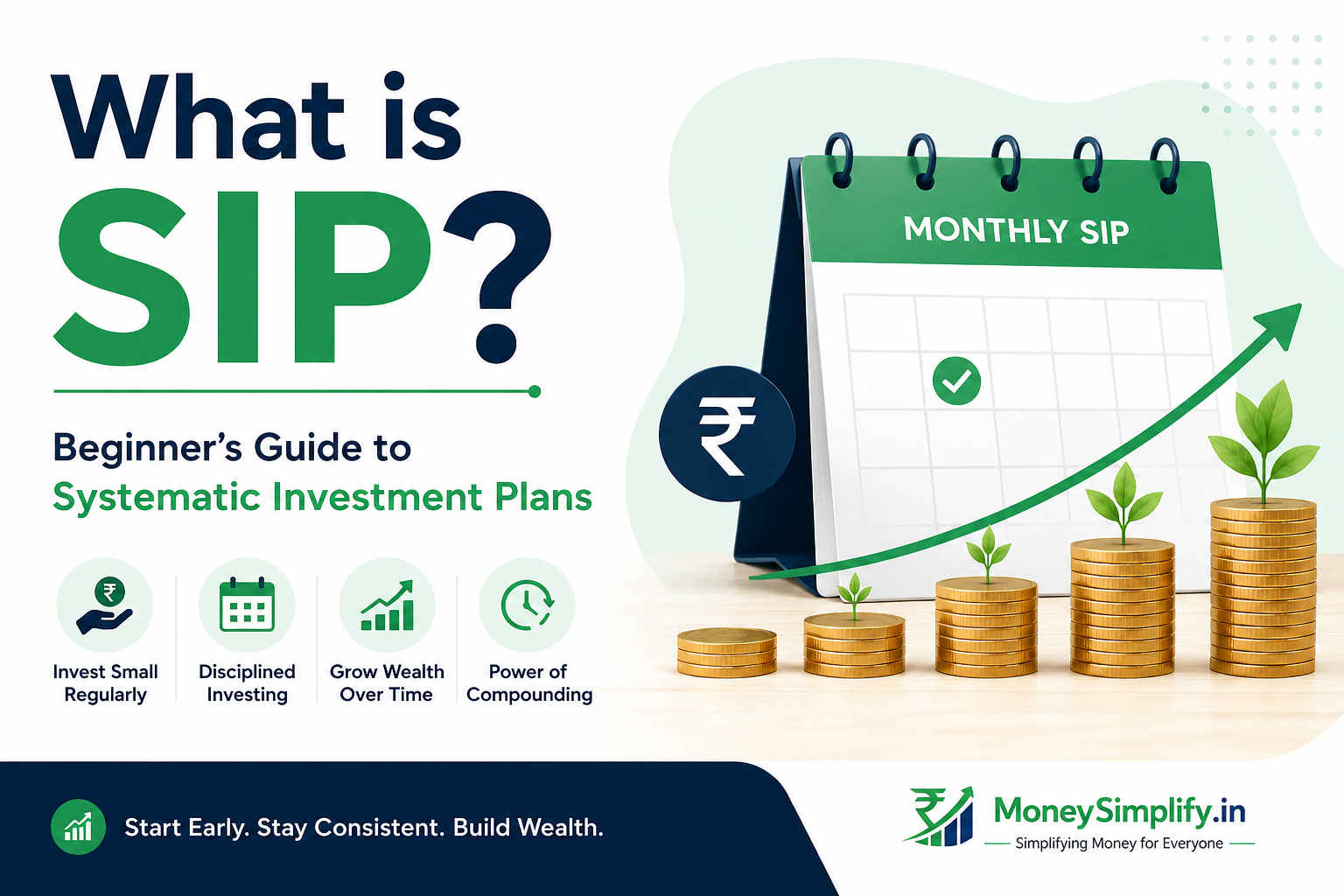

SIP is often considered one of the simplest ways to start investing, especially for beginners.
However, many investors still make mistakes that can affect:
- long-term returns,
- financial discipline,
- and investment confidence.
The good news is that most SIP mistakes are avoidable.
In this guide, let’s look at some of the most common SIP mistakes beginners make and how to avoid them.
What is SIP?
SIP (Systematic Investment Plan) is a method of investing fixed amounts regularly into mutual funds.
It helps investors:
- invest consistently,
- build long-term discipline,
- and participate in market growth gradually.
But even though SIP is simple, poor investing habits can still reduce its effectiveness.
1. Starting SIP Without a Financial Goal
One of the biggest mistakes beginners make is investing without clarity.
Many people start SIP simply because:
- friends recommended it,
- social media promoted it,
- or everyone else seemed to be investing.
However, SIP works better when connected to specific financial goals.
Examples:
- retirement planning,
- child education,
- buying a house,
- wealth creation.
Clear goals help determine:
- investment duration,
- risk level,
- and SIP amount.
2. Expecting Quick Profits
Some beginners expect SIP to generate fast profits within a few months.
This creates unrealistic expectations.
SIP is generally designed for:
long-term investing
Short-term market movements can fluctuate significantly.
Longer investment durations usually provide:
- better compounding opportunities,
- and improved wealth-building potential.
3. Stopping SIP During Market Falls
This is one of the most common emotional investing mistakes.
When markets fall:
- many investors panic,
- stop SIPs,
- or redeem investments early.
However, market corrections are a normal part of investing.
In fact, SIP may benefit during market declines because lower NAV allows investors to accumulate more mutual fund units.
Consistency is often more important than reacting emotionally to short-term market movements.
4. Investing More Than You Can Afford
Some people start aggressive SIP amounts that become difficult to maintain.
A better approach is:
- starting with manageable amounts,
- maintaining consistency,
- and increasing investments gradually over time.
SIP should support financial stability, not create financial stress.
5. Ignoring Risk Level
Not all mutual funds carry the same level of risk.
Some beginners invest in high-risk funds without understanding:
- volatility,
- investment horizon,
- or market fluctuations.
Before starting SIP, investors should understand:
- their risk tolerance,
- financial goals,
- and investment duration.
6. Choosing Funds Randomly
Another common mistake is selecting mutual funds only based on:
- recent returns,
- social media trends,
- or recommendations without research.
Past performance alone does not guarantee future results.
Beginners should focus on:
- understanding the fund,
- investment objective,
- consistency,
- and suitability for goals.
7. Not Reviewing SIP Periodically
Although SIP is long-term investing, periodic review is still important.
Over time:
- financial goals may change,
- income may increase,
- or risk tolerance may shift.
Reviewing SIP occasionally helps maintain alignment with long-term goals.
8. Starting Too Late
Many people delay investing because they think:
- they need large amounts,
- or they will start “later.”
However, one of the biggest advantages of SIP is starting early.
Even small investments can benefit significantly from:
compounding over time
Starting early often matters more than starting with huge amounts.
9. Ignoring Inflation
Some investors compare SIP only with short-term returns.
But inflation is also important.
Over long periods:
- inflation reduces purchasing power,
- and traditional savings may not always generate sufficient growth.
SIP is often preferred for long-term wealth creation because it may provide better inflation-beating potential compared to regular savings products.
10. Lack of Patience
SIP investing requires patience.
Many beginners:
- continuously check returns,
- compare with others,
- or become discouraged during temporary market fluctuations.
Long-term investing usually rewards:
- discipline,
- patience,
- and consistency.
How to Avoid SIP Mistakes
Here are some simple ways to improve SIP investing habits:
- invest with clear goals,
- stay consistent,
- avoid emotional decisions,
- invest according to risk tolerance,
- review investments periodically,
- and focus on long-term growth.
Frequently Asked Questions (FAQs)
Is stopping SIP during market falls a mistake?
Many long-term investors prefer continuing SIP during market declines because lower NAV may allow accumulation of more units.
How much SIP should beginners start with?
Beginners can start with small manageable amounts such as ₹500 or ₹1000 monthly.
Is SIP completely risk-free?
No, SIP investments are market-linked and involve investment risk.
Should SIP be reviewed regularly?
Yes, periodic reviews help ensure investments remain aligned with financial goals.
Final Thoughts
SIP can be a powerful long-term investing method when approached with patience and discipline.
Most SIP mistakes happen because of:
- unrealistic expectations,
- emotional reactions,
- or lack of planning.
The good news is that beginners can avoid many of these mistakes through:
- consistency,
- financial awareness,
- and long-term thinking.
Successful SIP investing is usually less about perfect timing and more about staying disciplined throughout the investment journey.