Many people believe investing is only about earning returns.
But in reality, one of the biggest reasons wealth grows over time is:
compound interest.
You may have heard compound interest described as:
“earning returns on your returns.”
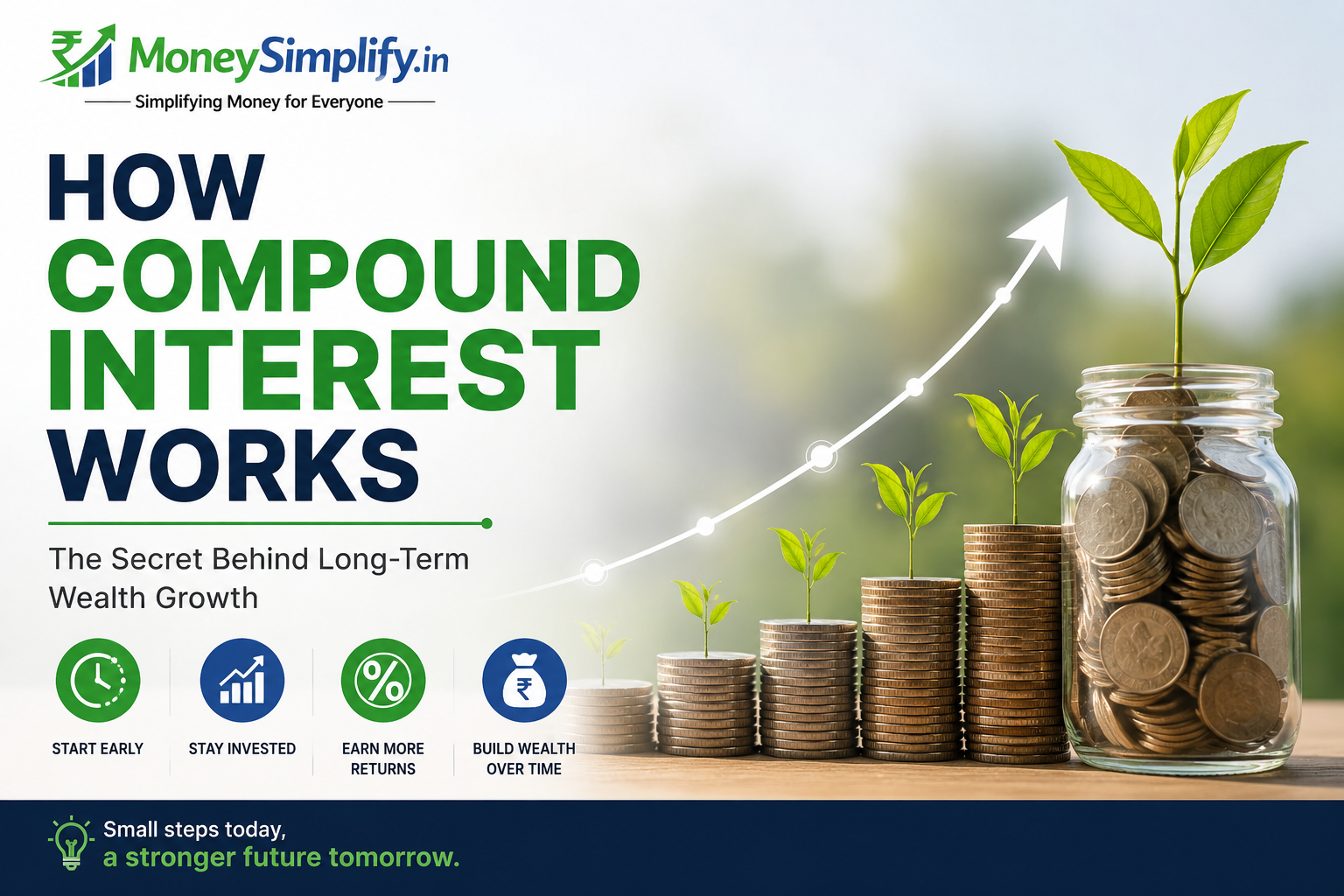
Although the concept sounds simple, its long-term impact can be extremely powerful.
In this guide, let’s understand how compound interest works in a simple and beginner-friendly way.
What is Compound Interest?
Compound interest is the process where:
- your invested money earns returns,
- and those returns start generating additional returns over time.
Unlike simple interest, where interest is calculated only on the original amount, compound interest allows growth on:
- the principal amount,
- and accumulated returns.
This creates:
compounding growth.
Simple Example of Compound Interest
Suppose you invest:
- ₹10,000
- at 10% annual return.
After the first year:
- your investment becomes ₹11,000.
Now in the second year:
- interest is calculated on ₹11,000,
- not just the original ₹10,000.
This means your returns also start earning returns.
Over long periods, this snowball effect becomes much larger.
Compound Interest Formula
The standard compound interest formula is:
Where:
- A = Final amount
- P = Principal investment
- r = Annual interest rate
- n = Number of times interest compounds per year
- t = Time period in years
You do not need to memorize the formula as a beginner, but understanding the concept is important.
Why Compound Interest is Powerful
The biggest strength of compound interest is:
time.
The longer money stays invested:
- the more returns accumulate,
- and the stronger compounding becomes.
This is why many investors prefer:
- long-term investing,
- early investing,
- and disciplined investing.
You can use our SIP Calculator and FD Calculator to understand how compounding may impact long-term returns.
Compound Interest vs Simple Interest
| Feature | Compound Interest | Simple Interest |
|---|---|---|
| Interest Calculated On | Principal + Returns | Principal Only |
| Growth Speed | Faster Over Time | Constant |
| Long-Term Wealth Potential | Higher | Lower |
| Best For | Long-Term Investing | Short-Term Lending |
Compound interest generally becomes more powerful over longer investment periods.
How Compound Interest Helps SIP Investors
SIP investors often benefit from compounding because investments continue regularly over long durations.
When investments remain consistent:
- returns accumulate,
- reinvestment continues,
- and wealth may grow faster over time.
This is one reason why starting SIP early is often encouraged.
Starting Early Makes a Huge Difference
One of the biggest advantages in investing is:
starting early.
Even smaller investments may grow significantly if given enough time.
For example:
- a person investing early for 20 years
may sometimes build more wealth than someone investing larger amounts for only a few years.
Time is one of the most important factors in compounding.
Factors Affecting Compound Growth
Several factors influence compound interest growth:
1. Investment Duration
Longer time periods usually strengthen compounding.
2. Rate of Return
Higher returns may increase long-term growth potential.
3. Regular Investing
Consistent investing helps build compounding momentum.
4. Staying Invested
Frequent withdrawals may reduce compounding benefits.
Common Mistakes That Reduce Compounding
Investing Too Late
Delaying investments reduces the time available for compounding.
Withdrawing Too Frequently
Removing money regularly interrupts growth momentum.
Expecting Quick Results
Compounding generally becomes more noticeable over longer periods.
Lack of Consistency
Irregular investing may weaken long-term wealth growth.
Where Compound Interest is Commonly Used
Compound interest is commonly associated with:
- SIP investments,
- mutual funds,
- fixed deposits,
- retirement investing,
- long-term savings,
- and wealth creation strategies.
Why Compounding Rewards Patience
Compounding may feel slow initially.
In the early years:
- growth often appears small.
But over longer durations:
- accumulated returns may grow much faster.
This is why many long-term investors focus on:
- patience,
- consistency,
- and time in the market.
Frequently Asked Questions (FAQs)
Is compound interest guaranteed?
No. Investment returns depend on the product and market conditions.
Why is compound interest important?
It helps investments potentially grow faster over long periods through reinvested returns.
Does SIP use compound interest?
SIP investments may benefit from compounding when returns remain invested over time.
Is starting early important for compounding?
Yes, longer investment durations usually provide stronger compounding opportunities.
Final Thoughts
Compound interest is one of the most important concepts in long-term investing and wealth creation.
It works by allowing:
- investments to grow,
- returns to accumulate,
- and reinvested returns to generate additional growth over time.
The true strength of compounding usually comes from:
starting early and staying invested consistently.
For beginners, understanding compound interest is an important step toward building better long-term financial habits and smarter investing decisions.