If you’ve been researching mutual funds, you’ve probably come across a term called:
Expense Ratio
At first glance, it may sound technical and unimportant.
However, understanding the expense ratio is essential because:
Even small fees can significantly impact your long-term investment returns.
Many beginners focus only on:
- Past returns,
- Fund ratings,
- Fund managers,
while ignoring one important factor:
The cost of investing.
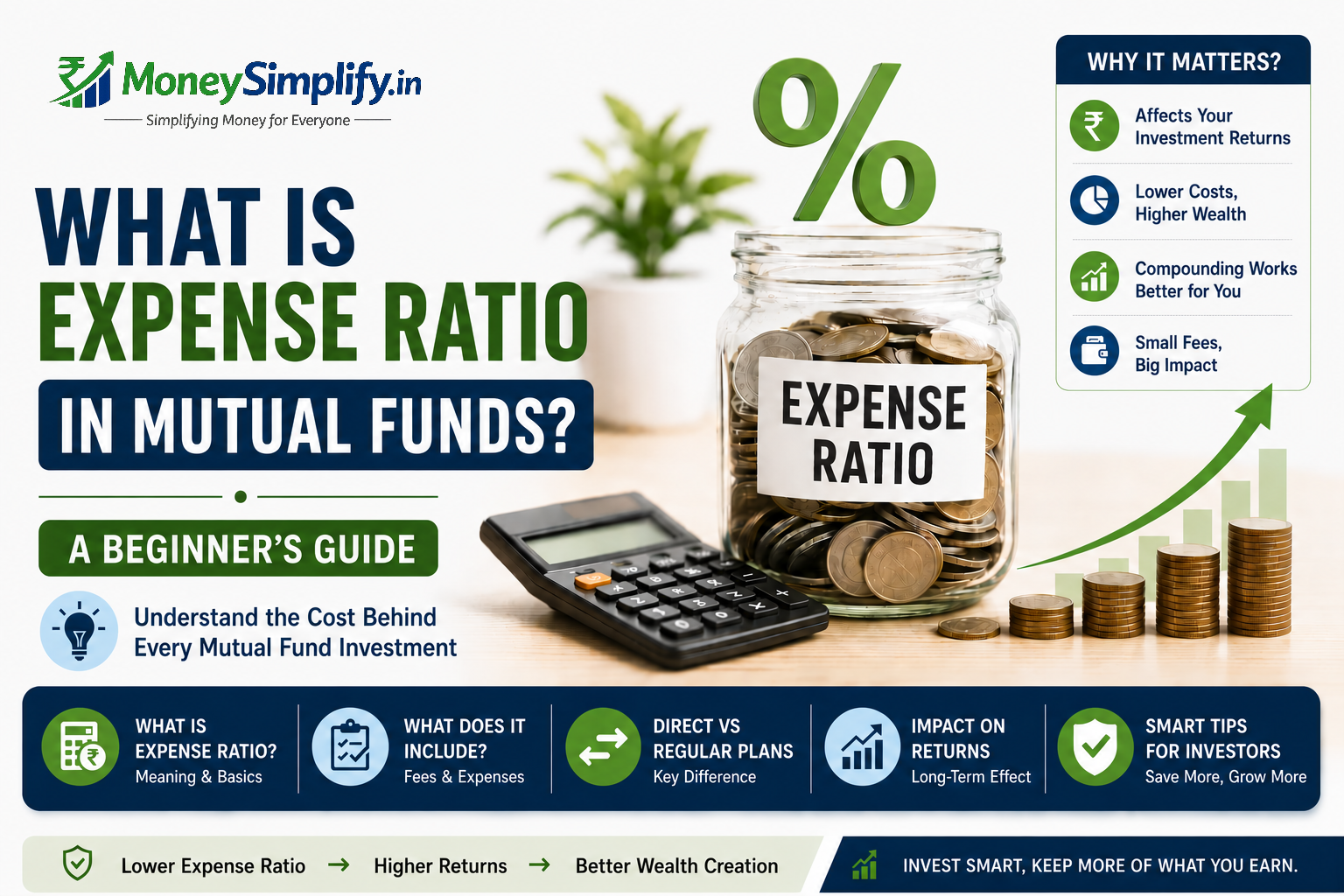
The expense ratio represents the annual fee charged by a mutual fund for managing your investments.
Although these charges may seem small, they can affect the amount of wealth you accumulate over many years.
In this guide, we’ll explain:
- What expense ratio means,
- How it works,
- Why it matters,
- How it affects your returns,
- And what expense ratio investors should look for.
What Is Expense Ratio?
Expense Ratio is:
The annual fee charged by a mutual fund company to manage and operate the fund.
This fee is expressed as a percentage of the fund’s total assets.
It covers expenses such as:
- Fund management fees,
- Administrative costs,
- Marketing and distribution expenses,
- Record-keeping costs,
- Operational expenses.
The expense ratio is automatically deducted from the fund’s assets.
This means:
You don’t pay it separately from your bank account.
Instead, it is reflected in the fund’s Net Asset Value (NAV).
Understanding Expense Ratio with an Example
Suppose you invest:
₹1,00,000in a mutual fund with an expense ratio of:
1% per yearThis means the fund company charges approximately:
₹1,000 annuallytowards managing the fund.
If another fund has an expense ratio of:
0.25% per yearthe annual cost would be approximately:
₹250At first glance:
₹750 differencemay not seem significant.
However, over 10–20 years, these differences can compound and meaningfully affect your investment outcomes.
Why Does Expense Ratio Matter?
Many investors underestimate the impact of costs.
The reality is:
Higher expenses reduce your net returns.
For example:
If two funds generate identical gross returns of:
12% annuallybut:
- Fund A charges 0.30%
- Fund B charges 1.50%
the investor in Fund A may retain more wealth over the long term.
This is because:
Lower costs leave more money invested and compounding.
How Expense Ratio Affects Long-Term Returns
Let’s consider a simplified example.
Assume:
- Investment Amount: ₹5,00,000
- Investment Period: 20 Years
- Gross Return Before Expenses: 12%
Scenario 1: Expense Ratio = 0.30%
Approximate net return:
11.70%Scenario 2: Expense Ratio = 1.50%
Approximate net return:
10.50%Although the difference appears small annually:
The gap widens significantly over decades because of compounding.
This is why expense ratio becomes especially important for long-term investors.
What Expenses Are Included in Expense Ratio?
Expense ratio may include costs related to:
1. Fund Management Fees
Compensation paid to fund managers and investment professionals responsible for portfolio decisions.
2. Administrative Expenses
Costs associated with:
- Record maintenance,
- Customer support,
- Compliance activities.
3. Registrar and Transfer Agent Fees
Expenses related to maintaining investor records and processing transactions.
4. Marketing and Distribution Costs
Expenses incurred for promoting and distributing mutual fund schemes.
These costs collectively form the expense ratio charged by the mutual fund.
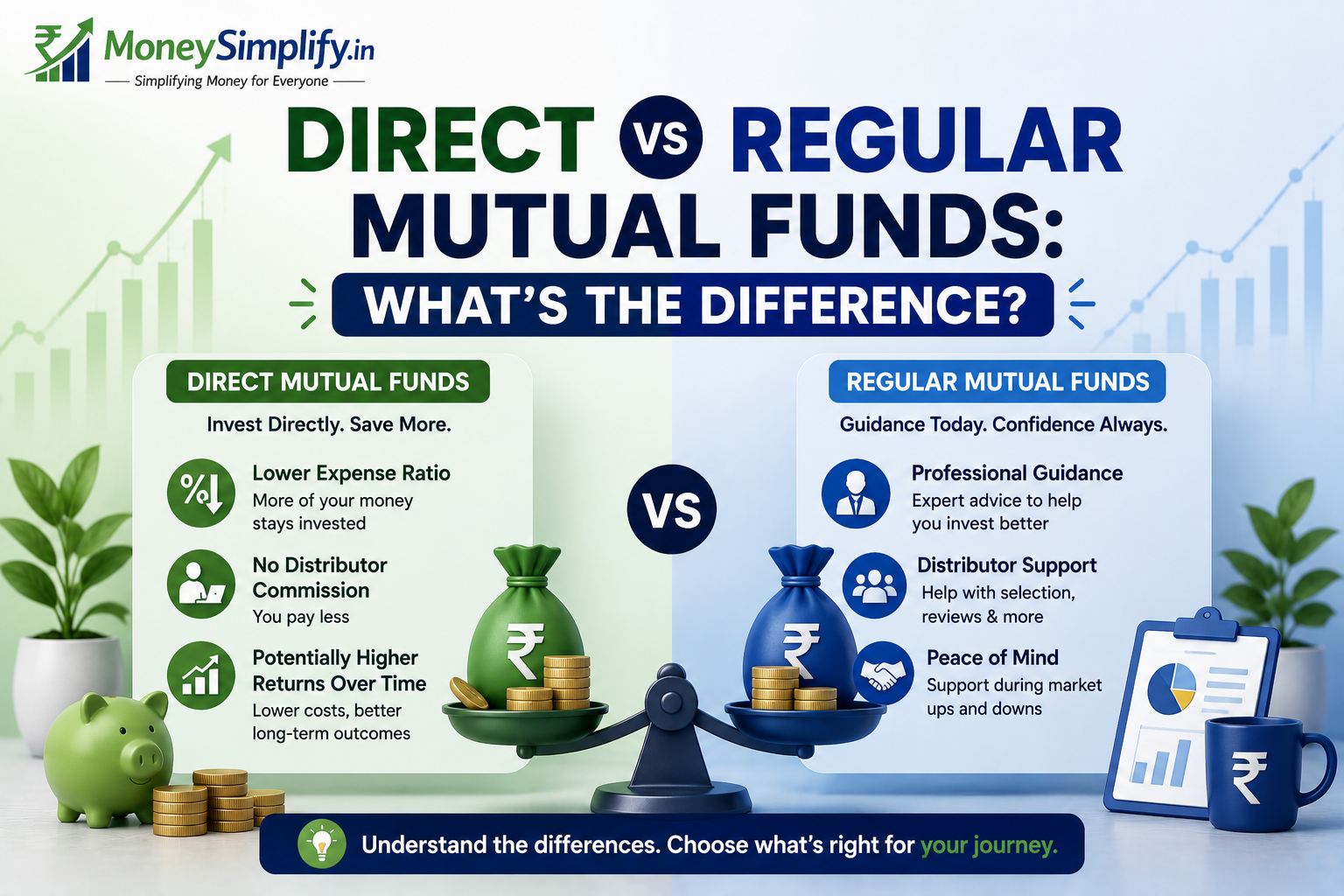
Direct Plans vs Regular Plans: Expense Ratio Difference
One major factor affecting expense ratio is whether you invest through:
- Direct Plans
- Regular Plans
Direct Plans
Direct Plans are purchased directly from the mutual fund company.
Characteristics:
- Lower expense ratios.
- No distributor commissions.
Regular Plans
Regular Plans are purchased through distributors, advisors, or intermediaries.
Characteristics:
- Higher expense ratios.
- Include distributor commissions.
This is one reason why Direct Plans often have slightly better net returns over time.
For a detailed comparison, read our guide on Direct vs Regular Mutual Funds: What’s the Difference?
Is a Lower Expense Ratio Always Better?
Not necessarily.
While lower expenses are generally favorable:
Expense ratio should not be the only factor when selecting a mutual fund.
Investors should also consider:
- Investment objectives,
- Risk profile,
- Fund consistency,
- Portfolio quality,
- Fund manager experience.
A slightly higher expense ratio may sometimes be reasonable if the fund consistently aligns with an investor’s goals.
However:
Higher costs should always be justified by value.
Typical Expense Ratios in Mutual Funds
Expense ratios vary depending on the type of mutual fund.
Generally:
| Fund Type | Typical Expense Ratio Range |
|---|---|
| Index Funds | Lower |
| Large Cap Funds | Moderate |
| Mid Cap Funds | Moderate to Higher |
| Small Cap Funds | Higher |
| Direct Plans | Lower |
| Regular Plans | Higher |
These ranges vary between fund houses and schemes.
Therefore:
Always review the latest Scheme Information Document (SID) before investing.
In the next section, we’ll discuss how to check expense ratios, common myths, FAQs, practical tips for investors, and whether you should avoid high-expense funds altogether.
How Can You Check a Mutual Fund’s Expense Ratio?
Checking the expense ratio of a mutual fund is simple.
You can usually find it in:
- The fund’s factsheet,
- The Scheme Information Document (SID),
- The Asset Management Company’s (AMC) official website,
- Mutual fund investment platforms.
Before investing, make it a habit to compare expense ratios among similar funds.
However, remember:
The lowest expense ratio should not automatically determine your investment decision.
Always consider the fund’s objectives and suitability for your financial goals.
Should Beginners Worry About Expense Ratio?
Yes, but not excessively.
For beginners:
- Understanding expense ratio is important.
- Comparing costs among similar funds is useful.
- Avoiding unnecessarily high expenses can benefit long-term returns.
However:
Expense ratio is just one piece of the puzzle.
Other important considerations include:
- Risk level,
- Investment horizon,
- Portfolio quality,
- Fund category,
- Consistency in performance.
Think of expense ratio as:
An important factor, but not the only deciding factor.
Common Myths About Expense Ratio
Myth 1: Lower Expense Ratio Always Means Better Returns
Fact:
Lower costs can improve net returns, but they do not guarantee better performance.
The fund’s investment strategy and suitability also matter.
Myth 2: Expense Ratio Is Charged Separately
Fact:
Expense ratio is deducted from the fund’s assets and reflected in the NAV.
Investors do not receive separate bills for these charges.
Myth 3: Higher Expense Ratios Always Indicate Better Management
Fact:
Paying more does not automatically result in better outcomes.
Investors should assess whether the higher costs are justified.
Myth 4: Expense Ratio Doesn’t Matter for Long-Term Investors
Fact:
Expense ratio becomes increasingly important over longer periods because of the impact of compounding.
Even small differences can influence wealth accumulation over decades.
Frequently Asked Questions (FAQs)
What is a good expense ratio for mutual funds?
There is no universal “good” expense ratio.
Generally:
- Lower expense ratios are preferred for similar fund categories.
- Direct Plans usually have lower expense ratios than Regular Plans.
Investors should evaluate costs alongside other factors.
Is expense ratio deducted every year?
Yes.
Expense ratio is charged annually but is adjusted daily through the fund’s NAV.
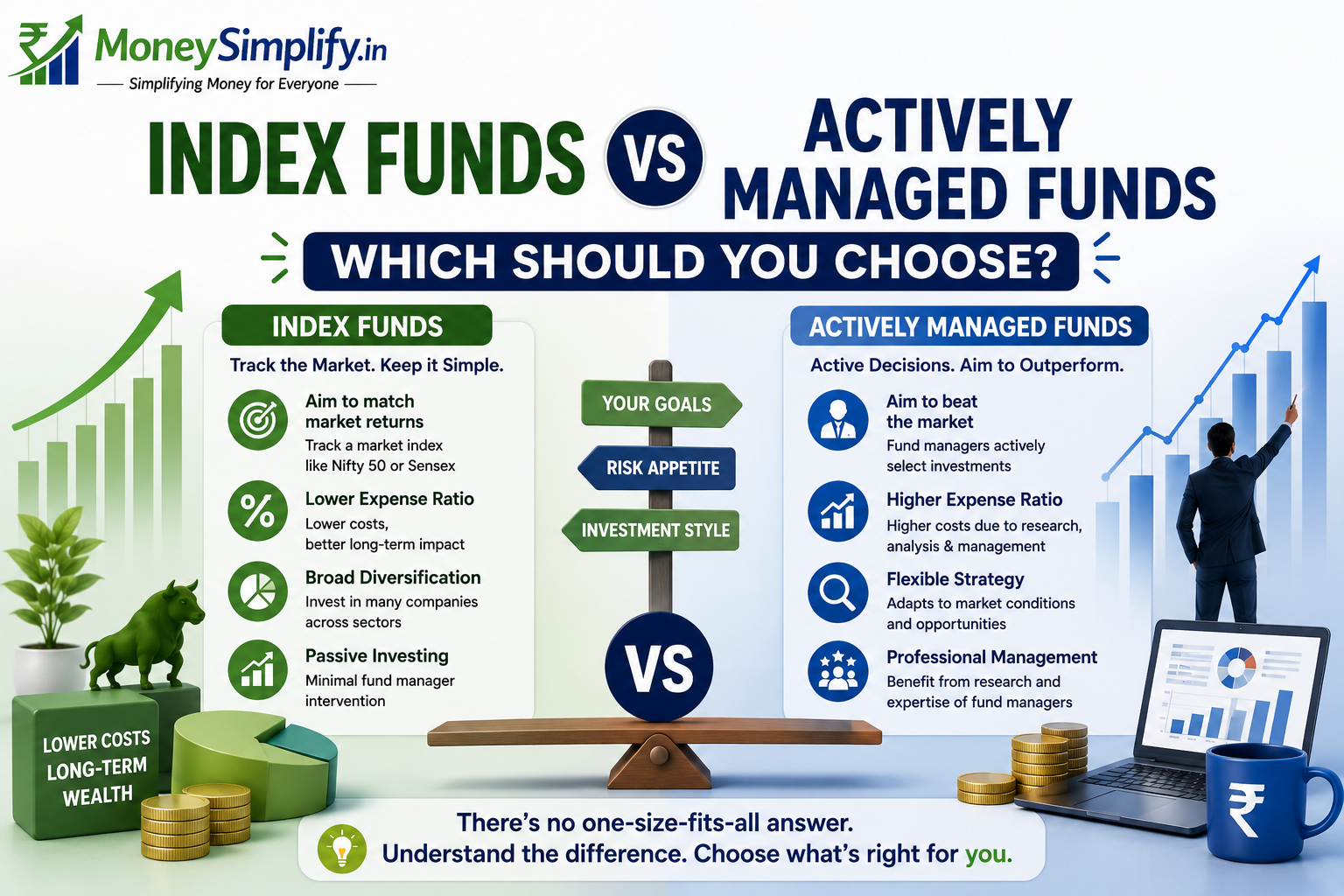
Do Index Funds have lower expense ratios?
In many cases, yes.
Since Index Funds follow a passive investment strategy, they often have lower costs compared to actively managed funds.
Which has a lower expense ratio: Direct Plans or Regular Plans?
Direct Plans generally have lower expense ratios because they do not include distributor commissions.
Should I avoid funds with higher expense ratios?
Not necessarily.
Higher expenses may sometimes be acceptable if they align with your investment goals and the value provided justifies the cost.
Does expense ratio guarantee better or worse returns?
No.
Expense ratio affects net returns, but it does not determine future performance.
Helpful Tools for Mutual Fund Investors
If you’re planning long-term investments through SIPs, these calculators can help you estimate potential outcomes.
SIP Calculator
Use our SIP Calculator to estimate how your monthly investments may grow over time and understand the power of long-term investing.
Step-Up SIP Calculator
Expect your income to increase in the future? Try our Step-Up SIP Calculator to see how increasing your SIP contributions annually may potentially accelerate wealth creation.
Crorepati SIP Calculator
Want to build a ₹1 Crore corpus? Our Crorepati SIP Calculator can help estimate the monthly SIP amount needed to work toward this financial milestone.
Practical Tips for Investors
Before selecting a mutual fund:
✓ Compare expense ratios within the same category.
✓ Understand whether you are investing through Direct or Regular Plans.
✓ Focus on long-term suitability rather than chasing the lowest cost.
✓ Review fund objectives and risk levels.
✓ Remember that consistency and discipline often matter more than small fee differences.
Final Thoughts
Expense Ratio is an important concept every mutual fund investor should understand.
Simply put:
It represents the annual cost of managing your investments.
While expense ratios may appear small, their impact can grow significantly over long investment periods because of compounding.
However:
Choosing a mutual fund solely based on expense ratio is not advisable.
The best approach is to evaluate:
- Your financial goals,
- Risk tolerance,
- Investment horizon,
- Fund suitability,
- And overall costs.
Remember:
Successful investing isn’t about finding the cheapest mutual fund—it’s about finding investments that align with your goals and staying invested consistently over time.
Understanding concepts like expense ratio helps you become a more informed investor and make better financial decisions.
Disclaimer: Mutual fund investments are subject to market risks. Read all scheme-related documents carefully before investing. This article is intended for educational purposes only and should not be considered financial advice.