
When people start managing money seriously, one common question often comes up:
Should you invest in SIP or keep your money in an FD?
Both SIP and Fixed Deposits (FDs) are popular investment options in India, but they work very differently.
Some people prefer the safety of FDs, while others choose SIPs for long-term wealth creation.
In this guide, let’s compare SIP vs FD in simple language so beginners can better understand which option may suit their financial goals.
What is SIP?
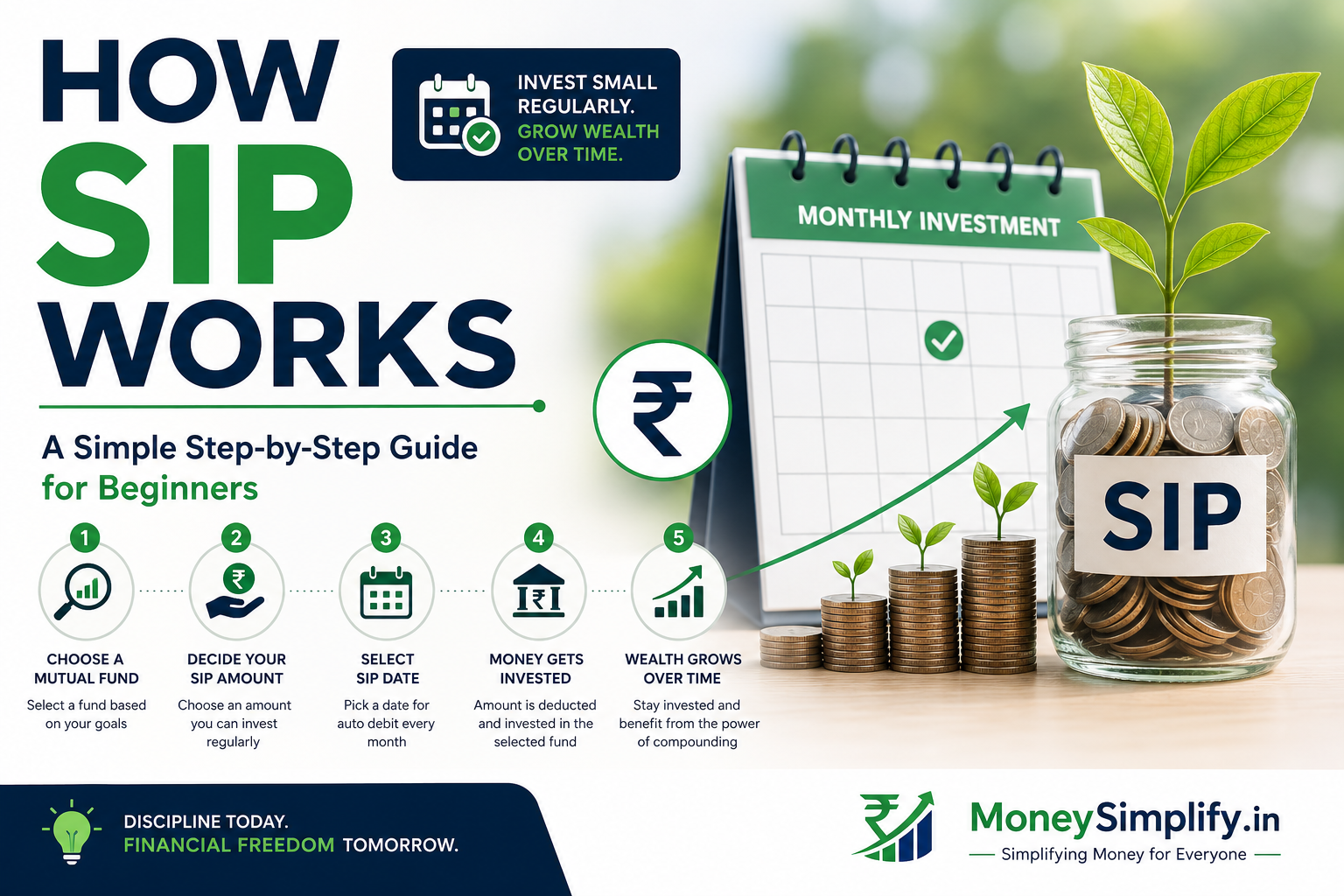
SIP (Systematic Investment Plan) is a method of investing regularly into mutual funds.
Instead of investing a large amount at once, investors contribute small fixed amounts monthly.
SIPs are linked to market-based mutual funds, which means returns can fluctuate depending on market performance.
What is FD?
FD (Fixed Deposit) is a savings product offered by banks and financial institutions.
In an FD:
- you deposit money for a fixed period,
- the bank provides a fixed interest rate,
- and returns are generally predictable.
FDs are considered safer and more stable compared to market-linked investments.
SIP vs FD — Quick Comparison
| Feature | SIP | FD |
|---|---|---|
| Investment Type | Mutual Fund Investment | Bank Deposit |
| Risk Level | Moderate to High | Low |
| Returns | Market-linked | Fixed |
| Flexibility | High | Medium |
| Wealth Creation Potential | Higher (long term) | Limited |
| Liquidity | Usually flexible | Depends on lock-in |
| Inflation Protection | Better potential | Often lower |
| Suitable For | Long-term goals | Capital safety |
Returns: SIP vs FD
One of the biggest differences between SIP and FD is returns.
FD Returns
FDs provide fixed interest rates decided by banks.
For example:
- 6%
- 7%
- 7.5%
Returns are predictable, but usually limited.
SIP Returns
SIP returns depend on mutual fund performance and market conditions.
Historically, equity mutual funds have often delivered better long-term returns compared to traditional FDs, although returns are not guaranteed.
This is why SIPs are commonly preferred for long-term wealth creation.
You can compare estimated returns using both our SIP Calculator and FD Calculator before choosing an investment option.
Risk Comparison
SIP Risk
SIPs are market-linked.
This means:
- markets may rise or fall,
- short-term losses are possible,
- returns are not guaranteed.
However, long-term investing through SIP may help reduce market volatility over time.
FD Risk
FDs are generally considered safer because returns are fixed.
They are suitable for conservative investors who prioritize capital protection over higher growth potential.
Inflation Impact
Inflation reduces the purchasing power of money over time.
For example:
- if inflation rises faster than FD returns,
- your real wealth growth may become limited.
SIPs are often preferred for long-term goals because they have better potential to beat inflation over long periods.
Flexibility Comparison
SIP Flexibility
SIPs are flexible because:
- you can start with small amounts,
- increase investments later,
- pause or stop SIPs,
- and invest monthly.
FD Flexibility
FDs are comparatively less flexible.
Premature withdrawal may:
- reduce interest earnings,
- or attract penalties in some cases.
SIP vs FD for Different Goals
Choose SIP If:
- you are investing for long-term goals,
- you want wealth creation potential,
- you can handle market fluctuations,
- you are starting SIP early.
Examples:
- retirement planning,
- child education,
- long-term wealth building.
Choose FD If:
- capital safety is your priority,
- you need predictable returns,
- your investment duration is shorter,
- you are uncomfortable with market risks.
Examples:
- emergency savings,
- short-term goals,
- conservative investing.
Can You Invest in Both SIP and FD?
Yes.
Many investors use both SIP and FD together.
For example:
- FD for safety and emergency funds,
- SIP for long-term growth.
This helps balance:
- stability,
- liquidity,
- and wealth creation.
Common Mistakes Beginners Make
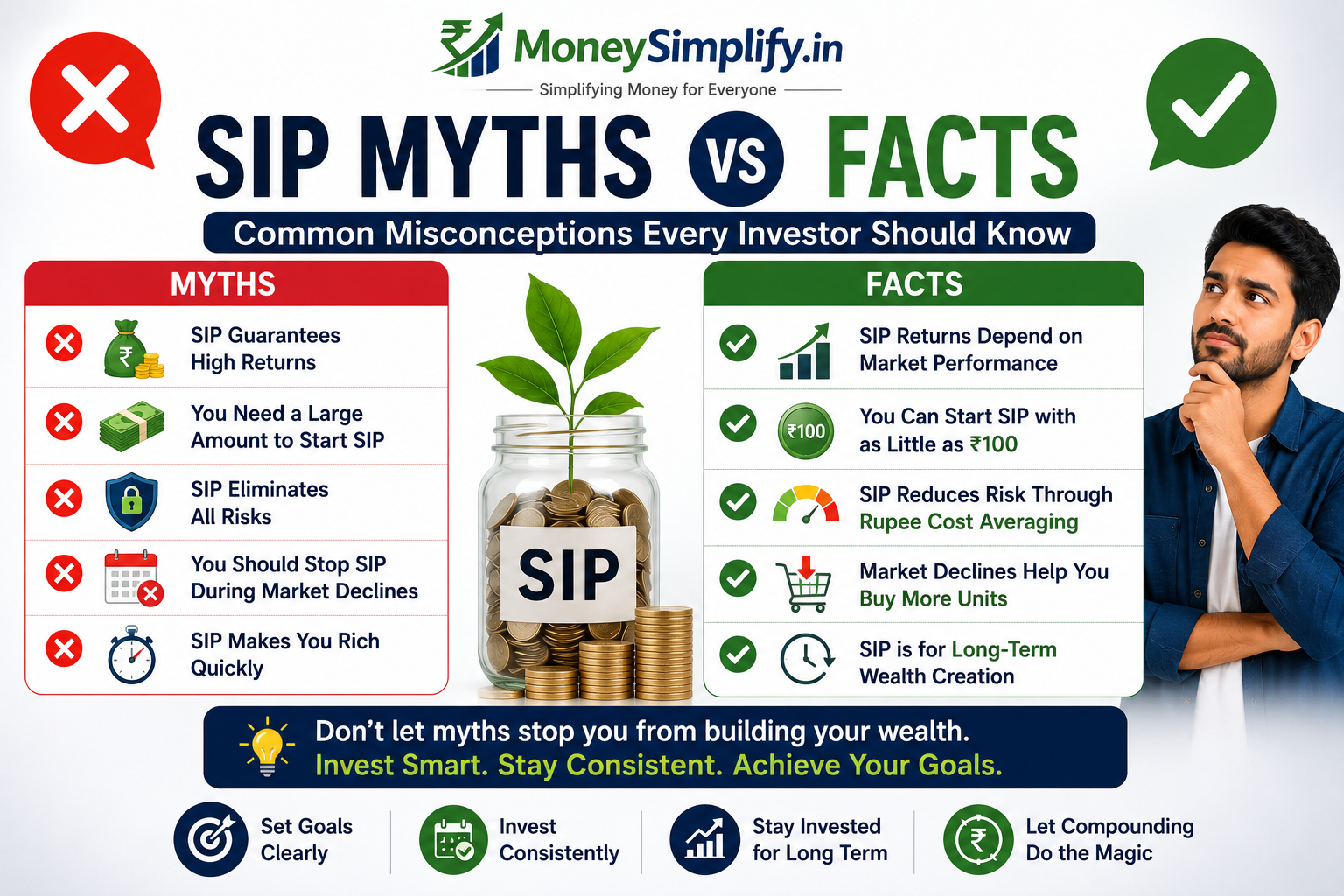
Expecting Guaranteed SIP Returns
SIPs are market-linked, so returns can fluctuate.
Ignoring Inflation in FD
Fixed returns may not always beat long-term inflation.
Stopping SIP During Market Falls
Many beginners panic during temporary market corrections.
Long-term consistency is usually more important in SIP investing.
Frequently Asked Questions (FAQs)
Is SIP safer than FD?
FD is generally safer because returns are fixed, while SIP involves market risk.
Can SIP give higher returns than FD?
Historically, long-term SIP investments have often delivered higher growth potential compared to traditional FDs.
Which is better for beginners?
It depends on:
- financial goals,
- risk tolerance,
- and investment duration.
Can I do SIP and FD together?
Yes, many investors combine both for balance and diversification.
Final Thoughts
Both SIP and FD have their own advantages.
FDs provide:
- stability,
- predictable returns,
- and lower risk.
SIPs offer:
- long-term wealth creation potential,
- inflation-beating opportunities,
- and market-linked growth.
Instead of asking:
“Which is absolutely better?”
it is often more useful to ask:
“Which option matches my financial goals and risk comfort?”
For many beginners, a balanced combination of SIP and FD can be a practical approach toward better financial planning.