Saving income tax is an important part of financial planning, but choosing the right tax-saving investment can be challenging.
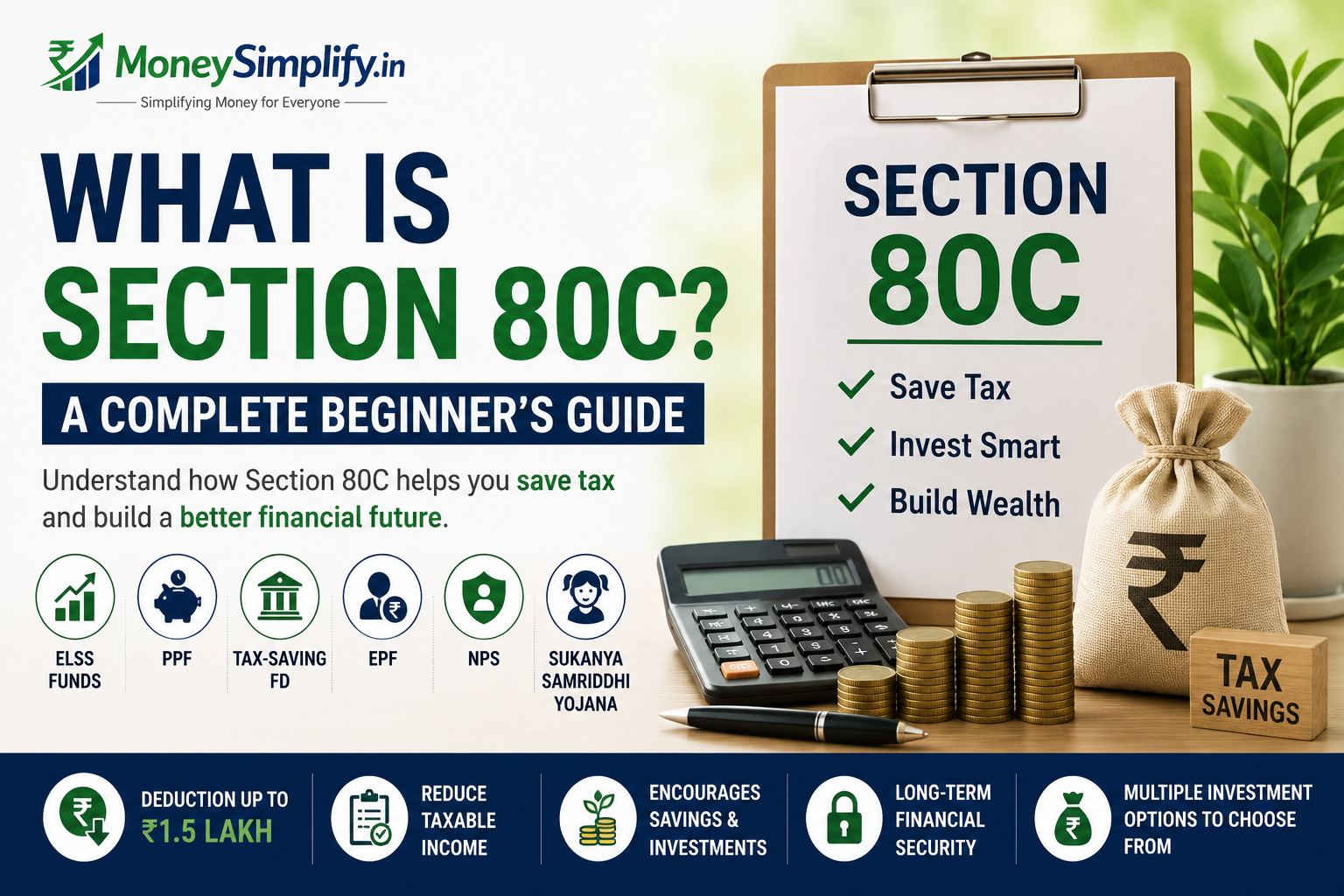
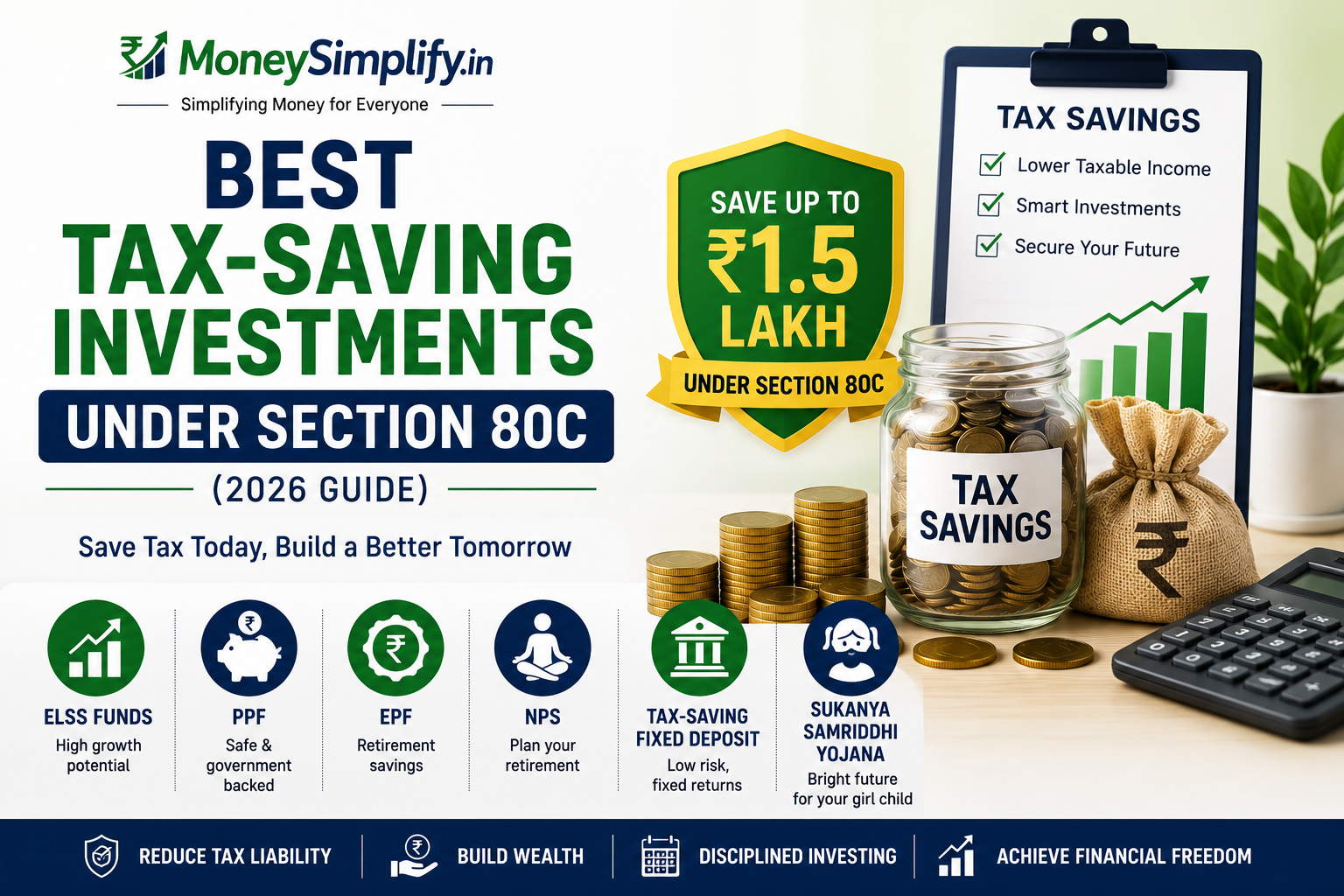
India offers several investment options under Section 80C of the Income Tax Act, allowing eligible taxpayers to claim deductions of up to ₹1.5 lakh per financial year.
However, not all Section 80C investments are the same.
Some prioritize safety, while others focus on wealth creation. Some have short lock-in periods, while others require long-term commitments.
So, which tax-saving investment is best for you?
In this guide, we’ll compare the most popular Section 80C investment options and help you choose the right one based on your financial goals, risk tolerance, and investment horizon.
What Is Section 80C?
Section 80C is one of India’s most widely used tax-saving provisions.
It allows eligible taxpayers to reduce taxable income by investing in approved financial instruments and making certain eligible expenses.
Maximum deduction:
₹1.5 lakh per financial yearThe actual tax savings depend on:
- Income level
- Applicable tax slab
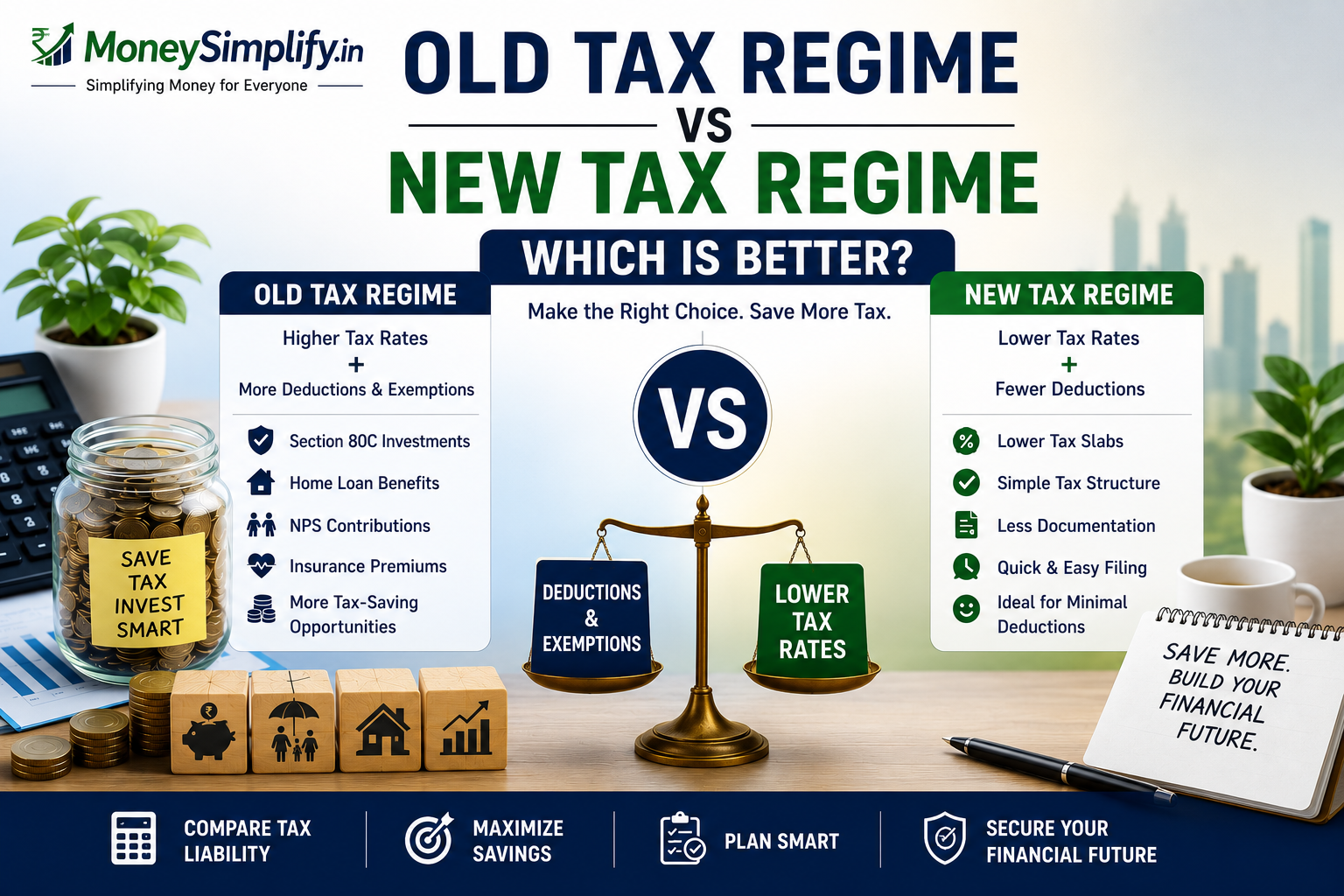
- Tax regime selected
Factors to Consider Before Choosing a Tax-Saving Investment
Before investing, ask yourself:
What Is Your Risk Tolerance?
Can you handle market fluctuations, or do you prefer stable returns?
What Is Your Investment Horizon?
Are you investing for:
- Short-term goals?
- Medium-term goals?
- Retirement planning?
Do You Need Liquidity?
Some investments lock your money for several years.
Are You Seeking Growth or Stability?
Different investments offer different risk-return profiles.
1. ELSS Funds
Equity Linked Savings Scheme (ELSS) is one of the most popular tax-saving investment options.
Key Features
- Eligible under Section 80C
- Equity market exposure
- Professionally managed
- Potential for long-term wealth creation
Lock-In Period
3 YearsRisk Level
Moderate to HighSuitable For
Investors who:
- Have a long-term horizon
- Can tolerate market volatility
- Want growth-oriented investments
Pros
✓ Shortest lock-in among major Section 80C investments.
✓ Potentially higher returns.
✓ SIP investment option available.
Cons
✗ Market risk.
✗ Returns are not guaranteed.
2. Public Provident Fund (PPF)
PPF is a government-backed savings scheme that has been a favorite among conservative investors for decades.
Key Features
- Government-backed
- Long-term savings
- Tax-efficient structure
Lock-In Period
15 YearsRisk Level
LowSuitable For
Investors seeking:
- Safety
- Stability
- Long-term financial planning
Pros
✓ Government-backed security.
✓ Suitable for conservative investors.
✓ Long-term savings discipline.
Cons
✗ Long lock-in period.
✗ Lower growth potential compared to equities.
3. Employee Provident Fund (EPF)
EPF is one of the most common tax-saving investments for salaried employees.
Key Features
- Retirement-oriented savings
- Employer contribution component
- Automatic salary deductions
Risk Level
LowSuitable For
Salaried employees seeking retirement savings.
Pros
✓ Disciplined investing.
✓ Retirement-focused.
✓ Tax benefits available.
Cons
✗ Limited flexibility.
✗ Primarily designed for retirement goals.
4. National Pension System (NPS)
NPS is a retirement-focused investment option offering market-linked growth opportunities.
Key Features
- Long-term retirement planning
- Equity and debt exposure
- Regulated pension structure
Risk Level
ModerateSuitable For
Investors focused on retirement planning.
Pros
✓ Long-term wealth accumulation.
✓ Diversified investment approach.
✓ Additional tax benefits may be available.
Cons
✗ Long investment horizon.
✗ Partial withdrawal restrictions may apply.
5. Tax-Saving Fixed Deposits
Tax-saving fixed deposits are offered by many banks.
Key Features
- Fixed returns
- Section 80C eligibility
- Low risk
Lock-In Period
5 YearsRisk Level
LowSuitable For
Investors prioritizing capital preservation.
Pros
✓ Predictable returns.
✓ Easy to understand.
✓ Widely available.
Cons
✗ Limited growth potential.
✗ Fixed returns may not beat inflation over long periods.
6. Sukanya Samriddhi Yojana (SSY)
SSY is a government-backed savings scheme designed for the financial future of a girl child.
Key Features
- Long-term savings
- Government-backed
- Section 80C eligible
Suitable For
Parents planning for:
- Education
- Marriage expenses
- Long-term financial security
Pros
✓ Dedicated child-focused savings.
✓ Government-backed structure.
Cons
✗ Only applicable under specific eligibility conditions.
Comparison of Popular Section 80C Investments
| Investment | Lock-In | Risk Level | Growth Potential |
|---|---|---|---|
| ELSS | 3 Years | Moderate-High | High |
| PPF | 15 Years | Low | Moderate |
| EPF | Retirement | Low | Moderate |
| NPS | Long-Term | Moderate | Moderate-High |
| Tax-Saving FD | 5 Years | Low | Low |
| SSY | Long-Term | Low | Moderate |
Which Tax-Saving Investment Is Best?
The answer depends on your financial goals.
Choose ELSS If:
- You want higher growth potential.
- You can tolerate market risk.
- You prefer a shorter lock-in period.
Choose PPF If:
- Safety is your priority.
- You are comfortable with a long investment horizon.
Choose EPF If:
- You are a salaried employee.
- Retirement planning is important.
Choose NPS If:
- You are focused on long-term retirement wealth.
Choose Tax-Saving FD If:
- You prefer predictable returns.
No single investment is ideal for everyone.
Many investors use a combination of options to balance risk, growth, and stability.
In next section, we’ll discuss common mistakes, tax-saving strategies, FAQs, and how to build an effective Section 80C portfolio for long-term financial success.
How to Build an Effective Section 80C Portfolio
Many investors make the mistake of putting all their money into a single tax-saving investment.
A more balanced approach may help manage risk while supporting multiple financial goals.
For example:
Conservative Investor
A conservative investor may consider:
- PPF
- EPF
- Tax-Saving Fixed Deposits
This approach focuses on capital preservation and stability.
Moderate Investor
A moderate investor may consider:
- PPF
- ELSS Funds
- NPS
This combination balances growth potential with stability.
Growth-Oriented Investor
An investor with a long-term horizon may consider:
- ELSS Funds
- NPS
This strategy focuses more on wealth creation and long-term capital growth.
The right allocation depends on your:
- Financial goals
- Risk tolerance
- Investment horizon
- Existing investments
Common Mistakes to Avoid
Investing Only for Tax Saving
Many taxpayers rush to invest in March simply to reduce taxes.
However, investments should support your overall financial plan rather than serving only as a tax-saving tool.
Ignoring Risk Levels
Every Section 80C investment carries a different level of risk.
For example:
- ELSS Funds are market-linked.
- PPF is government-backed.
- Tax-Saving FDs offer fixed returns.
Choosing investments without understanding their risk profile may lead to disappointment later.
Not Reviewing Investments Regularly
Financial situations change over time.
Regular portfolio reviews can help ensure that your investments continue to align with your goals.
Choosing Products Based Only on Returns
Past performance does not guarantee future results.
Investors should consider:
- Risk
- Lock-in period
- Liquidity
- Financial objectives
before making investment decisions.
Tax Planning Tips for Beginners
Start Early in the Financial Year
Instead of waiting until the last few months of the financial year, consider investing gradually throughout the year.
Benefits include:
- Better financial discipline
- Reduced financial pressure
- Opportunity to invest through SIPs
Align Investments With Goals
Different investments are designed for different purposes.
For example:
- ELSS may support wealth creation.
- NPS may support retirement planning.
- PPF may support long-term savings.
Maintain Diversification
A diversified portfolio can help reduce concentration risk.
Investors should avoid putting all their tax-saving investments into a single product.
Frequently Asked Questions (FAQs)
What is the best tax-saving investment under Section 80C?
There is no single best option for everyone.
The right choice depends on:
- Risk tolerance
- Financial goals
- Investment horizon
Many investors use a combination of ELSS, PPF, EPF, and NPS.
Which Section 80C investment has the shortest lock-in period?
Among major tax-saving investments:
ELSS Funds – 3 Yearshave the shortest lock-in period.
Is PPF safer than ELSS?
PPF is government-backed and generally considered lower risk.
ELSS invests in equities and therefore carries market risk, but it may offer higher growth potential.
Can I invest in multiple Section 80C products?
Yes.
Investors can use multiple eligible investments under Section 80C, subject to the overall deduction limit and applicable tax rules.
Is Section 80C available under the new tax regime?
Most Section 80C deductions are generally associated with the old tax regime.
Taxpayers should review the latest tax regulations before making investment decisions.
Advantages of Section 80C Investments
✓ Reduce taxable income.
✓ Encourage disciplined investing.
✓ Support retirement planning.
✓ Help build long-term wealth.
✓ Offer multiple investment choices.
✓ Promote financial awareness.
Limitations of Section 80C Investments
✗ Deduction limit restricted to ₹1.5 lakh.
✗ Some investments have long lock-in periods.
✗ Certain options may not suit all investors.
✗ Market-linked investments carry risk.
Final Verdict
Section 80C offers a wide range of tax-saving investment opportunities for different types of investors.
There is no universal “best” investment.
The ideal choice depends on your:
- Financial goals
- Risk tolerance
- Investment horizon
- Tax planning requirements
For investors seeking growth, ELSS Funds may be attractive.
For conservative investors, PPF and Tax-Saving Fixed Deposits may be more suitable.
For retirement-focused investors, EPF and NPS can play an important role.
The most effective strategy is often a balanced combination of investments that aligns with your long-term financial objectives.
Conclusion
Section 80C is much more than a tax-saving provision.
It provides an opportunity to build wealth, plan for retirement, save for future goals, and strengthen financial security.
By understanding the available options and selecting investments that match your needs, you can make smarter financial decisions while reducing your taxable income.
Remember that successful investing is not about choosing the most popular product—it’s about choosing the right product for your financial journey.
Disclaimer: This article is intended for educational purposes only and should not be considered tax, financial, or investment advice. Tax laws, regulations, and deduction limits may change over time. Please consult a qualified tax advisor or financial professional before making investment decisions.