One of the biggest questions in retirement planning is:
“How much money will I need to retire comfortably?”
There is no single amount that works for everyone.
The retirement corpus you need depends on your lifestyle, expected expenses, retirement age, inflation, life expectancy, and investment returns.
Planning your retirement corpus early allows you to invest systematically and avoid financial stress later in life.
In this guide, you’ll learn what a retirement corpus is, how it is estimated, the factors that influence it, and how you can start building it for a financially secure retirement.
What Is a Retirement Corpus?
A retirement corpus is the total amount of money accumulated during your working years to support your expenses after retirement.
This corpus should ideally generate sufficient income to help maintain your lifestyle without depending entirely on active employment.
Building an adequate retirement corpus is one of the primary objectives of long-term financial planning.
Why Is Retirement Corpus Important?
Without proper retirement savings, maintaining your standard of living after retirement can become difficult.
A well-planned retirement corpus can help you:
- Meet daily living expenses
- Manage healthcare costs
- Handle unexpected emergencies
- Maintain financial independence
- Reduce financial stress during retirement
Starting early provides more time for your investments to grow through compounding.
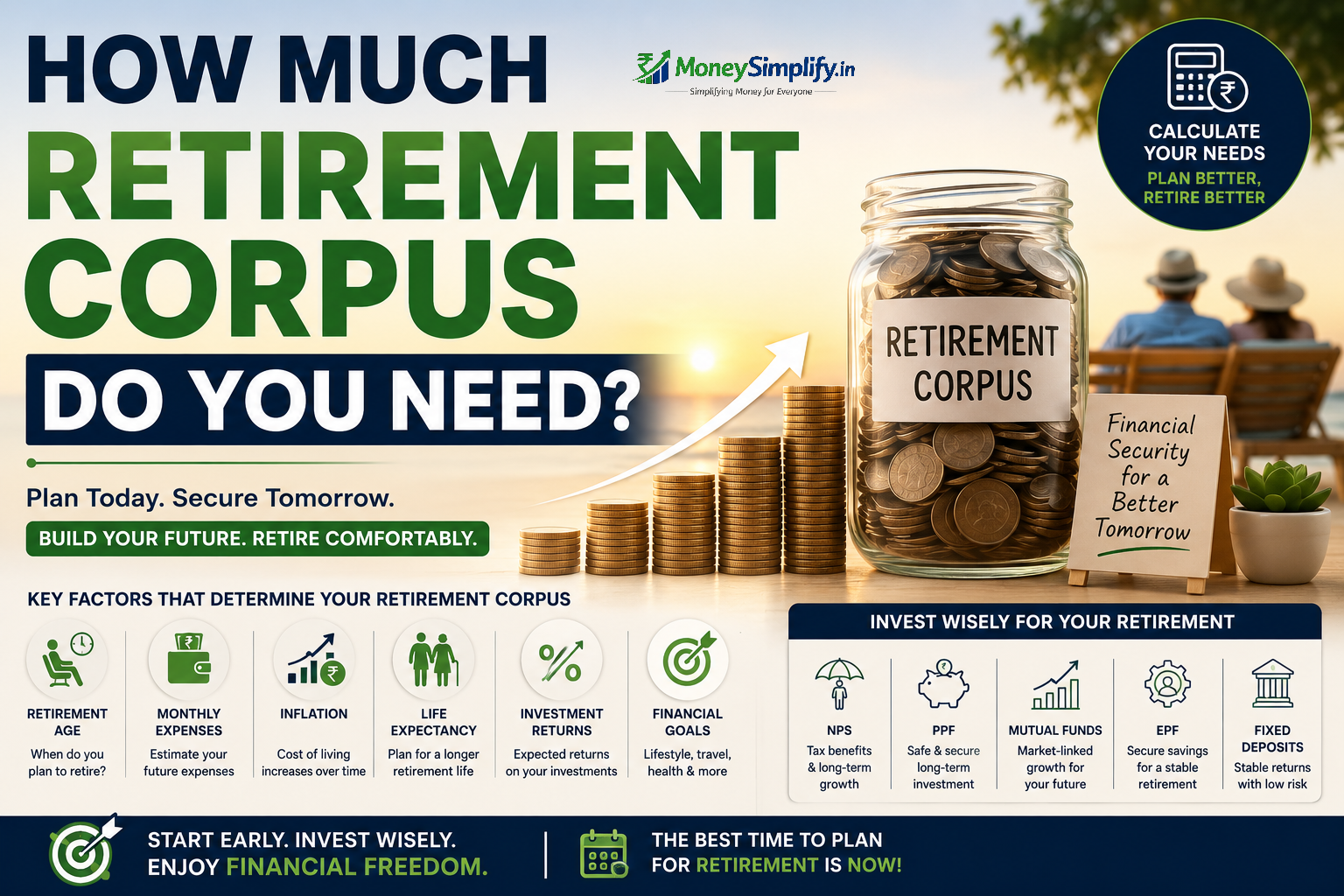
Factors That Determine Your Retirement Corpus
Every individual has different retirement requirements.
Several factors influence the amount of retirement savings you may need.
Retirement Age
The age at which you plan to retire affects the size of your required retirement corpus.
Retiring earlier generally requires a larger corpus because your savings may need to last for a longer period.
Monthly Expenses
Estimate the amount you expect to spend every month after retirement.
Consider:
- Household expenses
- Medical expenses
- Utilities
- Travel
- Insurance
- Lifestyle expenses
Inflation
Inflation gradually increases the cost of living.
Ignoring inflation is one of the biggest mistakes in retirement planning because future expenses are likely to be significantly higher than today’s expenses.
Life Expectancy
A longer life expectancy means your retirement savings may need to support you for more years.
Planning conservatively can help reduce the risk of exhausting your retirement funds.
Investment Returns
The growth of your retirement investments plays an important role in building your retirement corpus.
Higher long-term investment returns may reduce the amount you need to contribute regularly, although returns are never guaranteed.
How Can You Estimate Your Retirement Corpus?
There is no universal formula that applies to every investor.
However, a retirement estimate generally considers:
- Current age
- Planned retirement age
- Current monthly expenses
- Expected inflation
- Estimated investment returns
- Expected years in retirement
Using a retirement calculator can provide a more personalized estimate based on your financial situation.
Best Investments for Building a Retirement Corpus
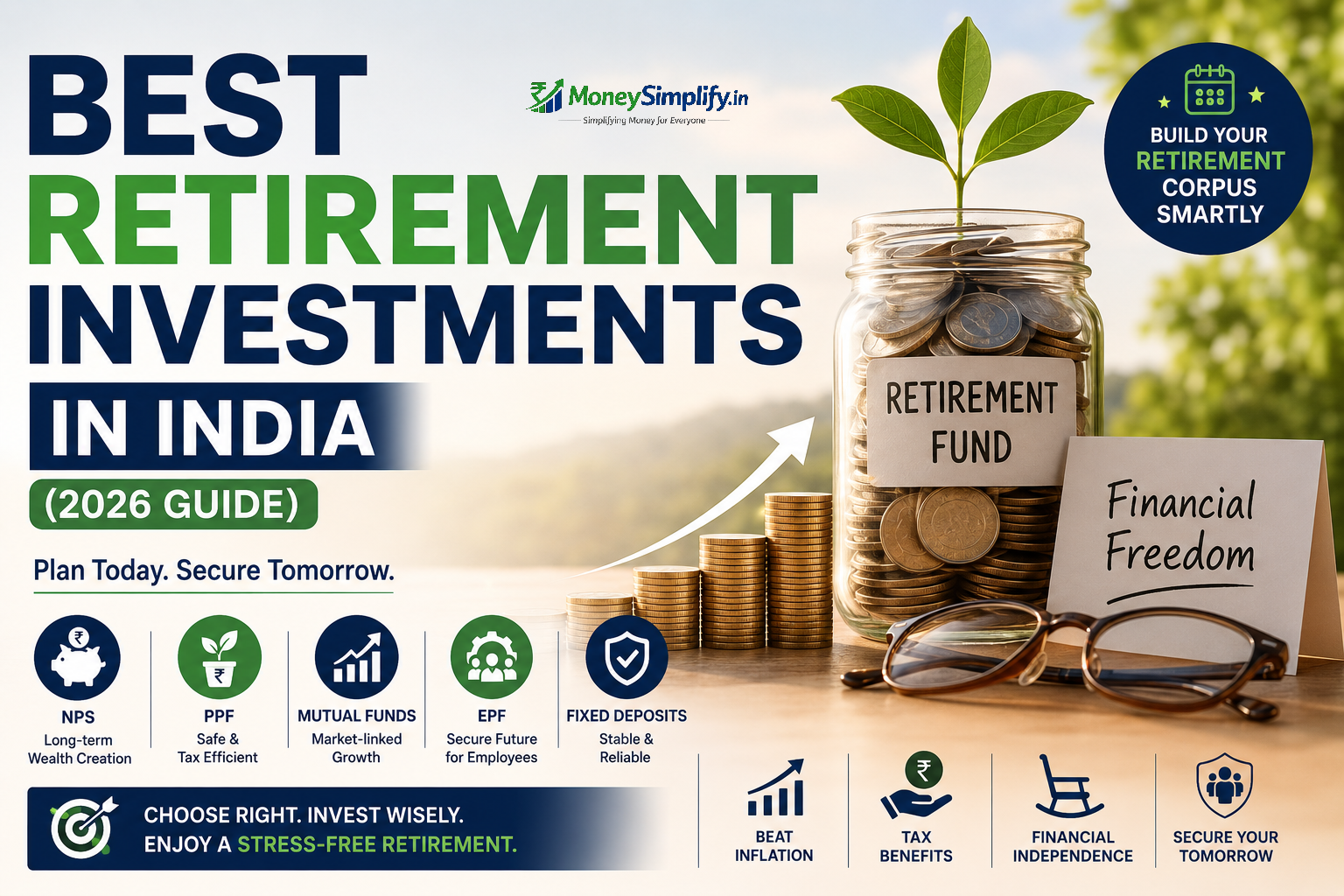
A diversified retirement portfolio may include investments such as:
- National Pension System (NPS)
- Public Provident Fund (PPF)
- Mutual Funds
- Employee Provident Fund (EPF)
- Fixed Deposits (FDs)
The appropriate investment mix depends on your financial goals, investment horizon, and risk tolerance.
In the next section, we’ll discuss common retirement planning mistakes, strategies to build your retirement corpus, frequently asked questions, and practical tips to help you prepare for a financially secure retirement.
How to Build Your Retirement Corpus
Building a retirement corpus requires discipline, consistency, and a long-term investment approach.
The following strategies can help you work toward your retirement goals.
Start Investing Early
One of the biggest advantages of starting early is the power of compounding.
The more time your investments have to grow, the greater the opportunity to accumulate wealth over the long term.
Invest Regularly
Consistent investing helps build your retirement corpus gradually.
Whether you invest monthly or at another regular interval, maintaining discipline is often more important than trying to time the market.
Diversify Your Investments
Avoid relying on a single investment product.
A diversified portfolio that includes different asset classes may help balance growth potential and investment risk.
Increase Investments as Income Grows
As your income increases, consider increasing your retirement contributions whenever possible.
Small increases over time can make a significant difference in your retirement corpus.
Review Your Retirement Plan Regularly
Your financial goals, expenses, and investment needs may change throughout your life.
Reviewing your retirement plan periodically helps ensure it remains aligned with your long-term objectives.
Common Mistakes to Avoid
Delaying Retirement Planning
Waiting too long to begin investing reduces the time available for compounding.
Starting early generally provides greater flexibility in achieving retirement goals.
Underestimating Inflation
Ignoring inflation may result in an inadequate retirement corpus.
Future living expenses are likely to be higher than current expenses.
Depending on a Single Investment
Building retirement savings using only one investment product may increase portfolio risk.
Diversification can help create a more balanced retirement strategy.
Ignoring Risk Tolerance
Choose investments that match your financial goals, investment horizon, and personal risk tolerance.
Not Reviewing Retirement Goals
Retirement planning is an ongoing process rather than a one-time decision.
Regular reviews help keep your financial plan on track.
Frequently Asked Questions (FAQs)
How much retirement corpus is enough?
There is no fixed amount that suits everyone.
The required retirement corpus depends on your expected expenses, retirement age, inflation, lifestyle, investment returns, and life expectancy.
When should I start planning for retirement?
The earlier you start, the better.
Beginning early provides more time for compounding and long-term wealth creation.
Can I build my retirement corpus through SIPs?
Many investors use SIPs in mutual funds as part of their long-term retirement strategy.
The suitability of SIPs depends on individual financial goals and risk tolerance.
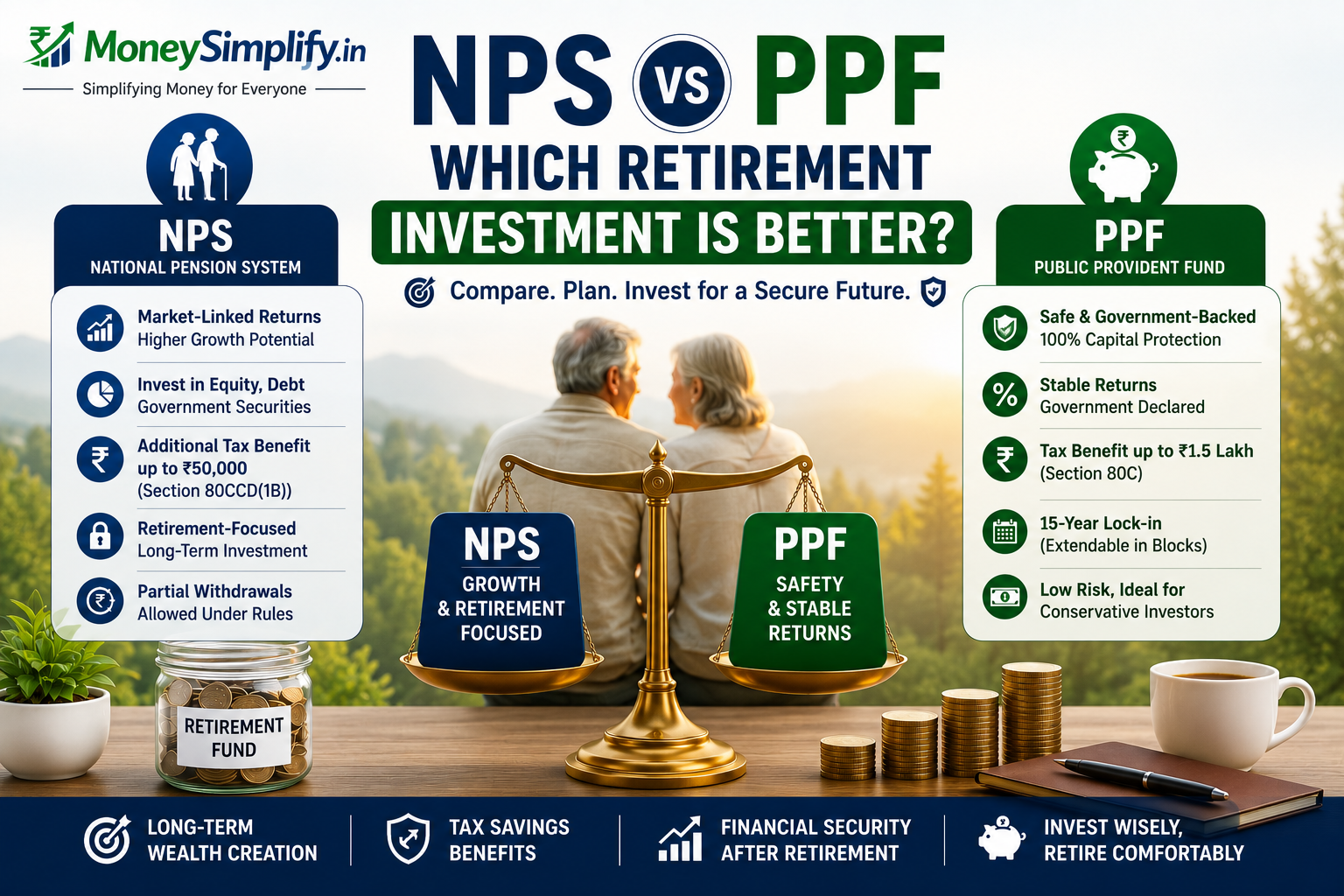
Should I invest only in NPS?
NPS can be an important part of retirement planning, but many investors prefer a diversified portfolio that may also include PPF, mutual funds, EPF, and other suitable investments.
Can a retirement calculator estimate my retirement corpus?
Yes.
A retirement calculator can provide an estimated retirement corpus based on factors such as age, expenses, inflation, expected returns, and retirement age.
Final Verdict
A retirement corpus is not simply a target amount—it represents your long-term financial security after you stop working.
By starting early, investing consistently, diversifying your investments, and reviewing your financial plan regularly, you can work toward building a retirement corpus that supports your future lifestyle and financial independence.
Conclusion
Retirement planning is a journey that begins long before retirement itself.
Understanding how much retirement corpus you may need is an important first step in creating a realistic financial plan.
While there is no universal retirement corpus suitable for everyone, careful planning, disciplined investing, and regular reviews can help you move closer to your retirement goals.
Using retirement-focused investments such as NPS, PPF, mutual funds, and EPF, together with a diversified investment strategy, can help you build long-term financial security.
Disclaimer: This article is for educational purposes only and should not be considered financial, investment, or tax advice. Retirement planning, investment returns, inflation assumptions, tax rules, and financial circumstances vary from person to person. Please consult a qualified financial advisor before making investment decisions.