
Planning for retirement is one of the most important financial decisions you will ever make.
A well-planned retirement investment strategy can help you maintain financial independence, manage inflation, and enjoy a comfortable lifestyle after you stop working.
However, with so many investment options available in India, choosing the right retirement plan can be confusing.
Should you invest in the National Pension System (NPS), Public Provident Fund (PPF), mutual funds, fixed deposits, or other retirement-focused investments?
The answer depends on your financial goals, investment horizon, and risk tolerance.
In this guide, we’ll explore some of the best retirement investment options in India, their features, advantages, and who they may be suitable for.
Why Retirement Planning Is Important
Many people postpone retirement planning because retirement feels far away.
However, starting early gives your investments more time to grow through the power of compounding.
A well-planned retirement strategy can help you:
- Build a retirement corpus
- Beat inflation over the long term
- Create a regular source of income after retirement
- Achieve financial independence
- Reduce financial stress during retirement
The earlier you begin investing, the greater the opportunity to accumulate long-term wealth.
Factors to Consider Before Choosing a Retirement Investment
Before selecting any retirement investment, consider the following factors.
Investment Horizon
Your investment horizon plays a major role in determining the right retirement strategy.
Longer investment horizons generally allow investors to take advantage of long-term market growth.
Risk Tolerance
Every investment carries a different level of risk.
Understanding your risk tolerance helps you choose investments that align with your financial objectives.
Liquidity Requirements
Some retirement investments have withdrawal restrictions, while others offer greater flexibility.
Choose investments according to your future cash flow requirements.
Tax Benefits
Several retirement investments may offer tax benefits under applicable provisions of the Income Tax Act.
Always verify the latest tax rules before investing.
Best Retirement Investments in India
1. National Pension System (NPS)
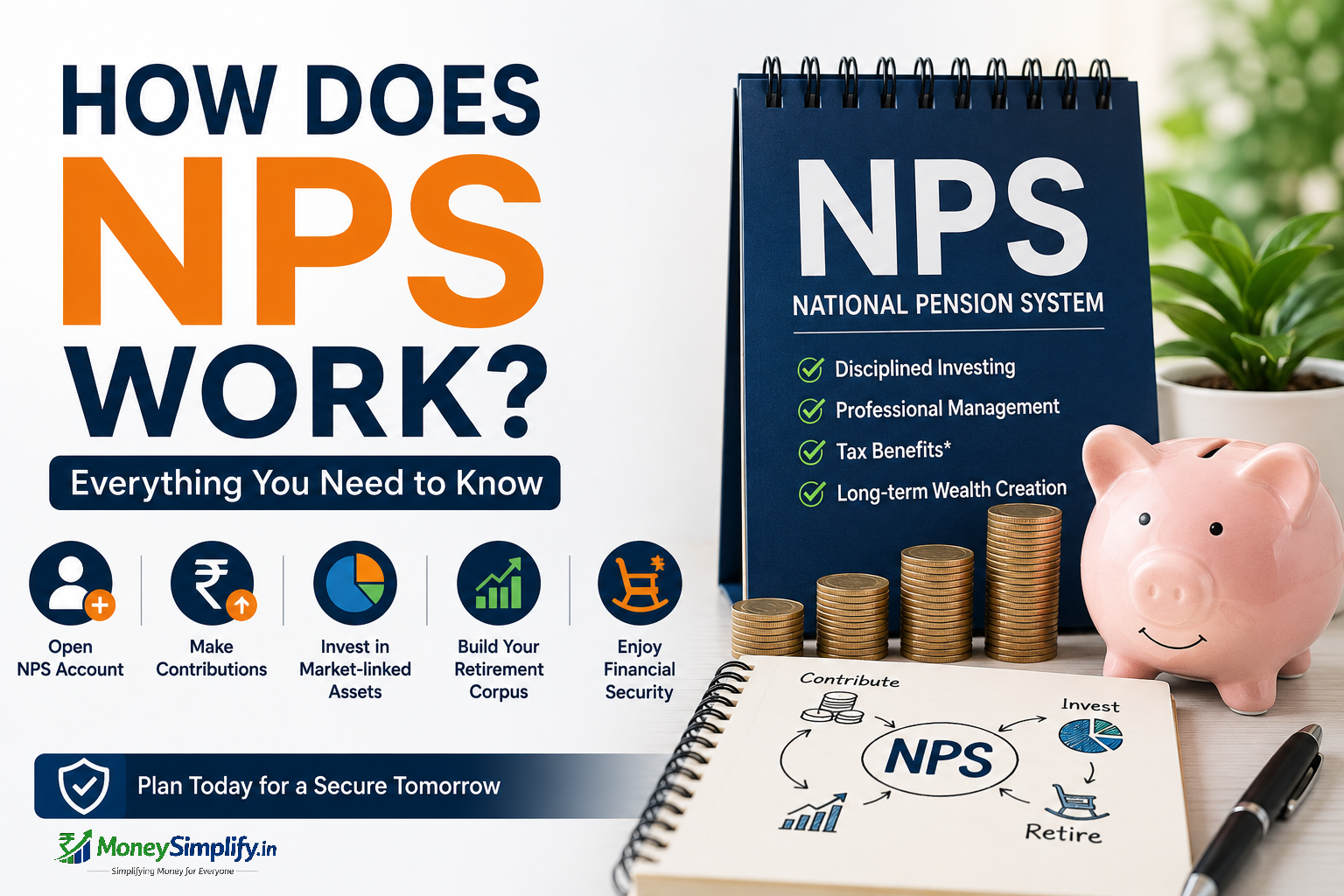
The National Pension System (NPS) is one of India’s most popular retirement-focused investment options.
Key Features
- Market-linked returns
- Professional fund management
- Diversified investments
- Retirement-focused investing
- Potential tax benefits
Suitable For
Individuals seeking long-term retirement planning and disciplined investing.
2. Public Provident Fund (PPF)
PPF is a government-backed long-term savings scheme widely used for retirement planning.
Key Features
- Government-backed investment
- Long-term savings
- Potential tax benefits
- Stable investment option
Suitable For
Investors seeking stability and lower investment risk.
3. Mutual Funds
Mutual funds can play an important role in long-term retirement planning.
Depending on your risk profile, investors may choose different categories of mutual funds.
Key Features
- Professional fund management
- Diversification
- Market-linked growth
- Suitable for long-term investing
Suitable For
Investors seeking long-term wealth creation with market exposure.
4. Employee Provident Fund (EPF)
EPF is a retirement savings scheme available to eligible salaried employees.
It helps individuals build long-term retirement savings through regular contributions.
Suitable For
Eligible salaried employees planning for retirement.
5. Fixed Deposits (FDs)
Fixed deposits remain a popular investment option among conservative investors.
Although they may not generate high long-term growth compared to market-linked investments, they can provide stability within a retirement portfolio.
Suitable For
Risk-averse investors seeking predictable returns.
Can You Combine Multiple Retirement Investments?
Yes.
Many investors diversify their retirement portfolio instead of relying on a single investment.
For example, an investor may combine:
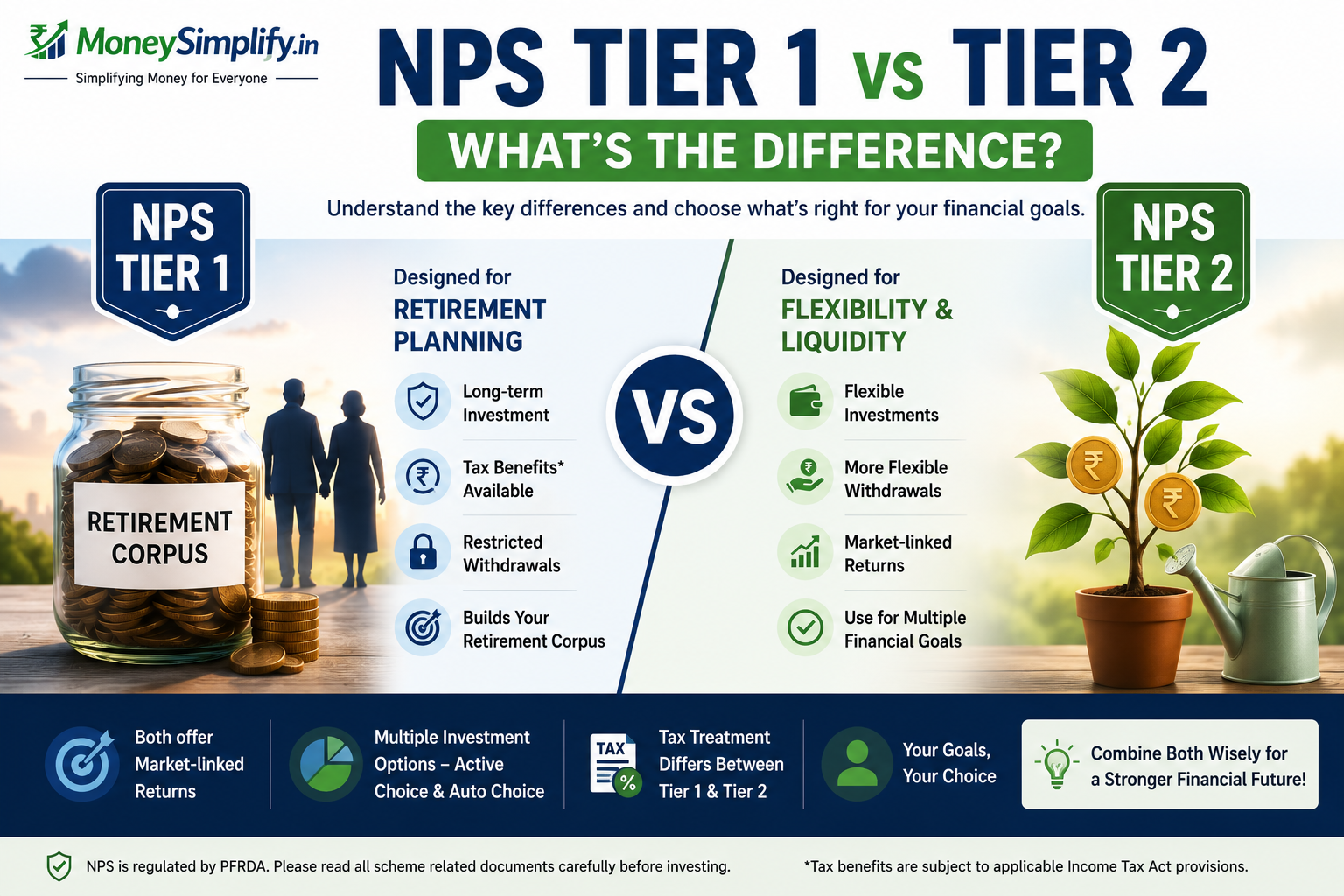
- NPS for retirement planning
- PPF for stability
- Mutual funds for long-term growth
- Fixed deposits for capital preservation
Diversification can help reduce overall portfolio risk while balancing growth and stability.
In the next section, we’ll compare these retirement investments, discuss common mistakes, answer frequently asked questions, and help you choose the most suitable retirement investment strategy for your financial goals.
Which Retirement Investment Is Best?
There is no single retirement investment that is suitable for everyone.
The best retirement investment depends on several factors, including:
- Your age
- Financial goals
- Risk tolerance
- Investment horizon
- Income level
- Liquidity requirements
For many investors, a diversified retirement portfolio that combines multiple investment options may be more appropriate than relying on a single investment.
Comparison of Popular Retirement Investments
| Investment | Risk Level | Returns | Liquidity | Suitable For |
|---|---|---|---|---|
| National Pension System (NPS) | Moderate | Market-linked | Restricted under applicable rules | Long-term retirement planning |
| Public Provident Fund (PPF) | Low | Government-backed | Limited | Conservative investors |
| Mutual Funds | Moderate to High | Market-linked | Generally flexible | Long-term wealth creation |
| Employee Provident Fund (EPF) | Low to Moderate | As per applicable rules | Subject to regulations | Salaried employees |
| Fixed Deposits (FDs) | Low | Fixed returns | High | Capital preservation |
Advantages of Diversifying Retirement Investments
Instead of investing all your money in one option, diversification allows investors to spread risk across different asset classes.
Potential benefits include:
- Better risk management
- Long-term wealth creation
- Improved portfolio stability
- Flexibility during retirement
- Balanced investment strategy
Diversification does not eliminate investment risk but may help reduce the impact of poor performance in any one asset class.
Common Mistakes to Avoid
Starting Retirement Planning Too Late
One of the biggest mistakes is delaying retirement investing.
Starting early gives investments more time to benefit from compounding.
Ignoring Inflation
Inflation reduces purchasing power over time.
Your retirement plan should aim to generate long-term growth that helps keep pace with rising living costs.
Investing Without Diversification
Relying entirely on one investment product may increase portfolio risk.
Diversification can help create a more balanced retirement strategy.
Choosing Investments Without Understanding Risk
Every retirement investment has different levels of risk and return.
Understand the investment before making financial decisions.
Not Reviewing Your Retirement Portfolio
Financial goals change over time.
Review your retirement investments periodically to ensure they continue to align with your objectives.
Frequently Asked Questions (FAQs)
Which is the safest retirement investment in India?
Government-backed schemes such as PPF are generally considered lower-risk retirement investment options.
However, suitability depends on individual financial goals and investment preferences.
Is NPS better than PPF?
NPS and PPF serve different purposes.
NPS offers market-linked growth potential, while PPF focuses on long-term government-backed savings.
The better option depends on your retirement strategy and risk tolerance.
Can I invest in both NPS and PPF?
Yes.
Many investors combine NPS and PPF to balance growth potential with stability.
Are mutual funds suitable for retirement?
Mutual funds may be suitable for long-term retirement investing, particularly for investors with a longer investment horizon and appropriate risk tolerance.
Should I diversify my retirement investments?
Yes.
Diversification is widely used to spread investment risk across different asset classes and investment products.
Final Verdict
The best retirement investment is not necessarily the one with the highest potential return, but the one that best matches your financial goals, investment horizon, and risk tolerance.
For many investors, combining investments such as NPS, PPF, mutual funds, EPF, and fixed deposits can create a balanced retirement portfolio that supports both long-term growth and financial stability.
Conclusion
Retirement planning should begin as early as possible.
Choosing suitable investment options today can help you build financial security and independence in the future.
Whether you prefer the growth potential of market-linked investments like NPS and mutual funds or the stability of government-backed schemes like PPF, a well-diversified retirement portfolio can help you work toward your long-term financial objectives.
Before making investment decisions, review your financial goals regularly and consider seeking professional financial advice if required.
Disclaimer: This article is for educational purposes only and should not be considered financial, investment, or tax advice. Investment returns, tax rules, and regulations may change over time. Please consult a qualified financial advisor before making investment decisions.