Choosing between the Old Tax Regime and the New Tax Regime is one of the most important tax decisions Indian taxpayers face today.
Many people are confused about which option can help them save more tax.
The answer depends on several factors, including:
- Income level
- Eligible deductions
- Investments under Section 80C
- Home loan benefits
- Insurance premiums
- Financial goals
While the new tax regime offers lower tax rates, the old tax regime allows taxpayers to claim various deductions and exemptions.
So, which one should you choose?
In this guide, we’ll compare both tax regimes, explain their advantages and disadvantages, and help you decide which option may be better for your situation.
What Is the Old Tax Regime?
The old tax regime is the traditional tax system that allows taxpayers to claim various deductions and exemptions.
Some commonly used deductions include:
- Section 80C investments
- Employee Provident Fund (EPF)
- Public Provident Fund (PPF)
- ELSS Funds
- National Pension System (NPS)
- Life insurance premiums
- Home loan benefits
Under the old regime, taxpayers can reduce their taxable income through eligible deductions.
What Is the New Tax Regime?
The new tax regime was introduced to simplify the tax system.
It offers:
✓ Lower tax rates.
✓ Simplified tax calculation.
✓ Reduced paperwork.
However, most deductions and exemptions available under the old regime are generally not available under the new regime.
As a result, taxpayers must evaluate whether lower tax rates compensate for the loss of deductions.
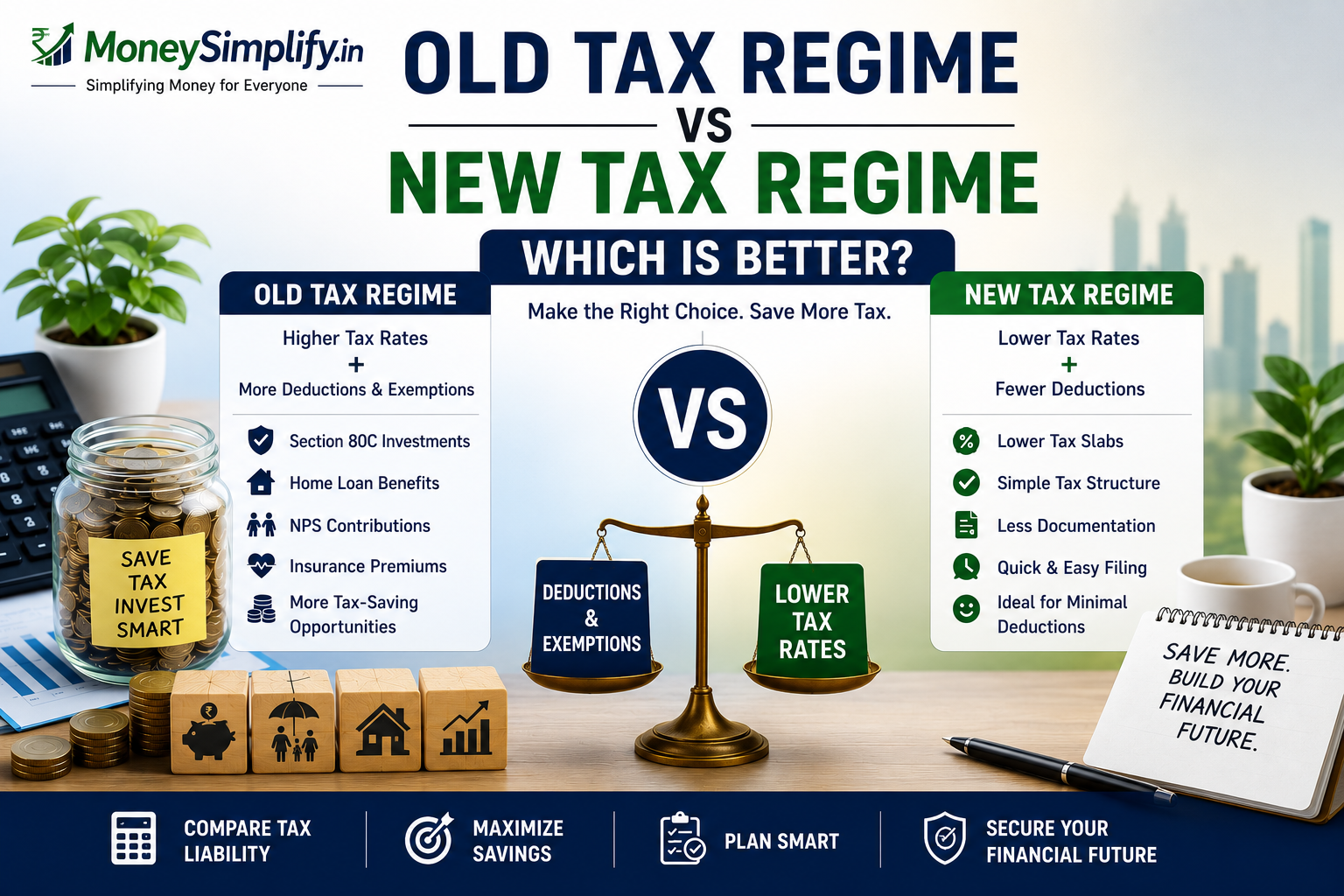
Key Difference Between Old and New Tax Regime
The biggest difference is:
Old Tax Regime
Higher tax rates
+
Deductions and exemptions
New Tax Regime
Lower tax rates
+
Fewer deductions
Choosing the right option depends on how many deductions you normally claim.
Popular Deductions Available Under the Old Tax Regime
Many taxpayers prefer the old regime because of its tax-saving opportunities.
Section 80C
Investments up to:
₹1.5 lakhmay qualify for deductions under applicable tax laws.
Examples include:
- ELSS Funds
- PPF
- EPF
- Tax-Saving Fixed Deposits
NPS Contributions
Eligible NPS contributions may provide additional tax benefits under applicable provisions.
Home Loan Benefits
Certain home loan repayments and interest payments may qualify for tax benefits.
Insurance Premiums
Eligible life and health insurance premiums may qualify under relevant tax provisions.
Advantages of the Old Tax Regime
More Tax-Saving Opportunities
Investors can use deductions to reduce taxable income.
Encourages Financial Planning
The old regime promotes:
- Saving
- Investing
- Retirement planning
Beneficial for High Deduction Users
Taxpayers with significant deductions often find the old regime more attractive.
Advantages of the New Tax Regime
Simplicity
The new regime is easier to understand and manage.
Less Documentation
Fewer deductions mean less paperwork.
Lower Tax Rates
Many taxpayers benefit from lower slab rates.
Suitable for Beginners
People with limited investments may prefer the simplicity of the new regime.
Who Should Consider the Old Tax Regime?
The old regime may be beneficial for taxpayers who:
✓ Invest regularly under Section 80C.
✓ Claim home loan benefits.
✓ Contribute to NPS.
✓ Pay insurance premiums.
✓ Have significant deductions.
The more deductions you claim, the more attractive the old regime may become.
Who Should Consider the New Tax Regime?
The new regime may be suitable for taxpayers who:
✓ Do not claim many deductions.
✓ Prefer a simpler tax structure.
✓ Have limited tax-saving investments.
✓ Want lower tax rates without managing multiple deductions.
Example Comparison
Consider two taxpayers with similar income.
Taxpayer A
- Invests in ELSS Funds
- Contributes to EPF
- Pays insurance premiums
- Claims home loan benefits
The old tax regime may be more beneficial.
Taxpayer B
- Has minimal investments
- Claims few deductions
- Prefers simplicity
The new tax regime may be more attractive.
Factors to Consider Before Choosing
Before selecting a tax regime, evaluate:
Your Financial Goals
Do your investments support long-term wealth creation?
Your Deductions
How much do you currently claim under Section 80C and other provisions?
Your Investment Horizon
Do you actively invest for retirement and future goals?
Tax Liability
Compare estimated tax liability under both regimes.
Many taxpayers benefit from calculating both options before making a decision.
In next section, we’ll discuss common mistakes, frequently asked questions, tax planning strategies, and provide a final verdict on choosing between the old and new tax regimes.
Common Mistakes When Choosing a Tax Regime
Many taxpayers select a tax regime without properly evaluating their financial situation.
Here are some common mistakes to avoid.
Choosing Based Only on Tax Rates
Many people assume that lower tax rates automatically mean lower taxes.
However, deductions available under the old tax regime can significantly reduce taxable income.
Always compare the final tax liability under both options.
Ignoring Section 80C Investments
Taxpayers who regularly invest in:
- ELSS Funds
- PPF
- EPF
- Tax-Saving Fixed Deposits
may benefit from deductions available under the old tax regime.
Ignoring these deductions can result in a less favorable tax outcome.
Not Reviewing the Regime Every Year
Your financial situation may change over time.
Factors such as:
- Salary increases
- Home loans
- Insurance premiums
- Retirement contributions
can affect which regime is more beneficial.
Regular reviews can help optimize tax planning.
Following Generic Advice
A tax regime that works for one person may not work for another.
Income level, deductions, and financial goals vary from individual to individual.
Tax Planning Tips
Calculate Tax Under Both Regimes
Before making a choice, compare your estimated tax liability under both regimes.
This simple exercise often provides the clearest answer.
Keep Records of Deductions
Taxpayers choosing the old tax regime should maintain proper documentation for eligible deductions and exemptions.
Align Tax Planning With Financial Goals
Tax-saving investments should support long-term objectives such as:
- Wealth creation
- Retirement planning
- Child education
- Financial security
Avoid Last-Minute Decisions
Tax planning is most effective when done throughout the financial year rather than at the last moment.
Old Tax Regime vs New Tax Regime: Quick Comparison
| Feature | Old Tax Regime | New Tax Regime |
|---|---|---|
| Tax Rates | Higher | Lower |
| Deductions Available | Yes | Limited |
| Section 80C Benefits | Available | Generally Not Available |
| Home Loan Benefits | Available | Limited/Not Available |
| Documentation | More | Less |
| Tax Planning Flexibility | Higher | Lower |
| Simplicity | Moderate | High |
Frequently Asked Questions (FAQs)
Which tax regime is better?
There is no universal answer.
The better option depends on:
- Income level
- Deductions claimed
- Financial goals
- Tax-saving investments
Can I switch between tax regimes?
Tax rules regarding switching may vary depending on taxpayer category and prevailing regulations.
Taxpayers should verify current rules before making a decision.
Does Section 80C apply in the new tax regime?
Most Section 80C deductions are generally associated with the old tax regime.
Taxpayers should refer to current tax regulations for the latest updates.
Is the new tax regime simpler?
Yes.
The new tax regime generally involves fewer deductions and less paperwork.
Should salaried employees choose the old or new regime?
It depends on the deductions and exemptions they normally claim.
Employees with substantial deductions may find the old regime more beneficial.
Is a home loan more useful under the old regime?
Many taxpayers use home loan-related deductions available under the old tax regime as part of their tax planning strategy.
Advantages of the Old Tax Regime
✓ Supports tax-saving investments.
✓ Encourages disciplined financial planning.
✓ Rewards long-term investing.
✓ Offers multiple deduction opportunities.
✓ Beneficial for taxpayers with significant deductions.
Advantages of the New Tax Regime
✓ Lower tax rates.
✓ Easier tax calculations.
✓ Less paperwork.
✓ Suitable for taxpayers with few deductions.
✓ Simple and straightforward structure.
Final Verdict
The choice between the old tax regime and the new tax regime depends on your individual financial profile.
The old tax regime may be beneficial if you:
- Invest under Section 80C
- Claim home loan benefits
- Pay insurance premiums
- Contribute to retirement-focused investments
The new tax regime may be attractive if you:
- Have limited deductions
- Prefer simplicity
- Want a straightforward tax structure
The most effective approach is to compare both options and select the one that results in the lowest overall tax liability while supporting your long-term financial goals.
Conclusion
Both tax regimes are designed to serve different types of taxpayers.
The old tax regime rewards savings and investments through deductions, while the new tax regime focuses on simplicity and lower tax rates.
Before making a decision, carefully review your income, deductions, financial goals, and investment strategy.
A thoughtful comparison can help you maximize tax efficiency and make smarter financial decisions.
Disclaimer: This article is for educational purposes only and should not be considered tax, financial, or legal advice. Tax laws, deductions, exemptions, and regulations may change over time. Please consult a qualified tax professional before making tax-related decisions.