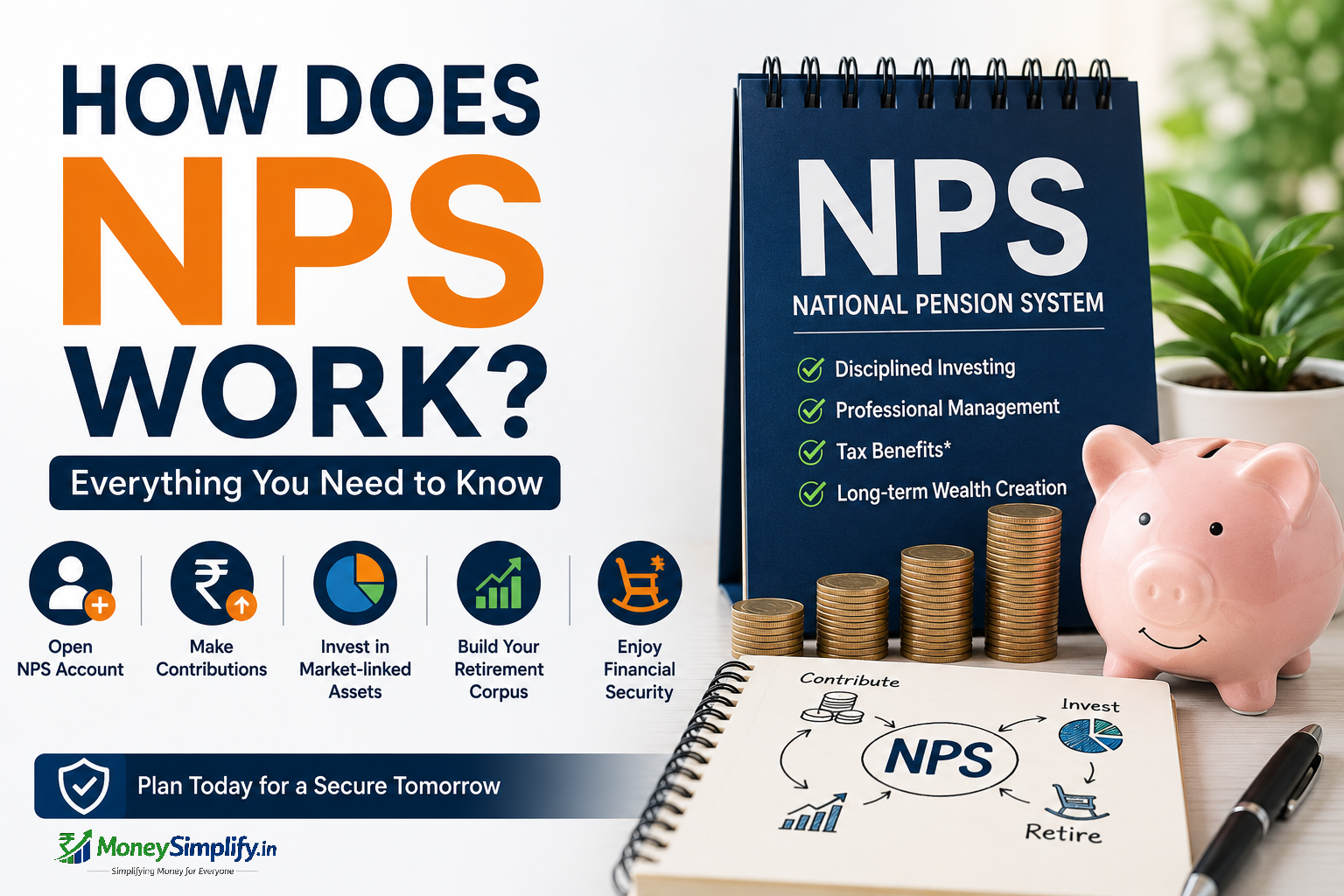
If you’re planning to invest in the National Pension System (NPS), you’ll come across two types of accounts: Tier 1 and Tier 2.
Many beginners are confused about which one they should choose.
Although both accounts are part of the NPS framework, they are designed for different purposes.
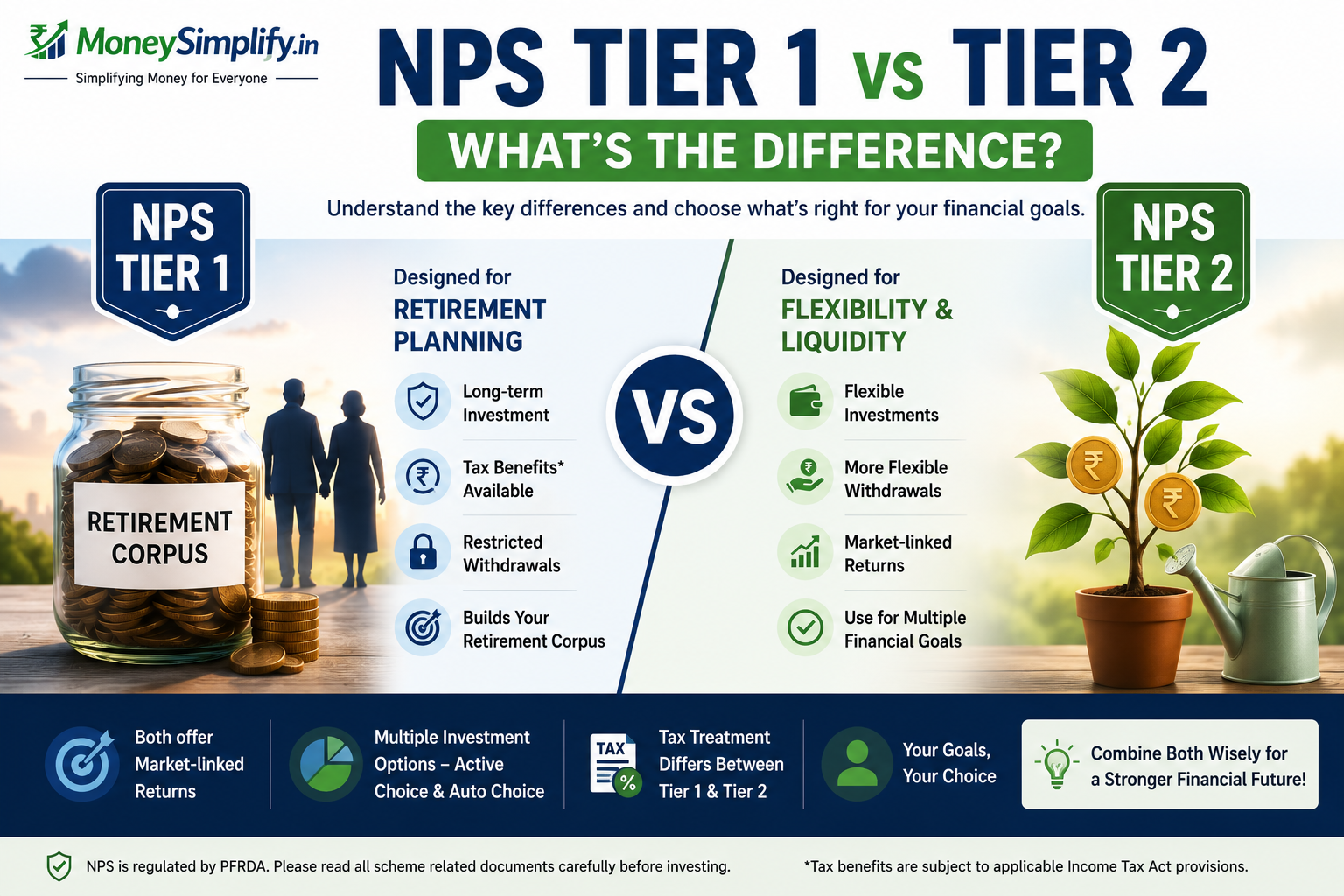
Tier 1 focuses primarily on retirement savings, while Tier 2 offers greater flexibility for investors who want easier access to their money.
Understanding the differences between these two accounts can help you make better financial decisions and choose the option that best suits your goals.
In this guide, we’ll compare NPS Tier 1 and Tier 2 in detail, including eligibility, withdrawals, tax benefits, investment options, flexibility, and who each account is best suited for.
What Is an NPS Tier 1 Account?
The Tier 1 Account is the primary retirement account under the National Pension System.
It is specifically designed to help individuals build a retirement corpus through disciplined long-term investing.
Most investors open a Tier 1 account because it provides retirement-focused benefits and may offer tax benefits under applicable provisions.
Key Features of Tier 1
- Retirement-focused investment
- Long-term wealth creation
- Market-linked returns
- Regulated withdrawal rules
- Potential tax benefits
What Is an NPS Tier 2 Account?
The Tier 2 Account is an optional investment account available to eligible NPS subscribers.
Unlike Tier 1, Tier 2 offers greater flexibility in terms of withdrawals and access to invested money.
It functions more like a voluntary investment account rather than a dedicated retirement account.
Key Features of Tier 2
- Flexible investments
- Easier withdrawals
- Market-linked returns
- No mandatory retirement objective
- Suitable for investors seeking flexibility
NPS Tier 1 vs Tier 2: Quick Comparison
| Feature | Tier 1 | Tier 2 |
|---|---|---|
| Primary Purpose | Retirement Planning | Flexible Investing |
| Withdrawal Flexibility | Restricted under applicable rules | More Flexible |
| Tax Benefits | Available under applicable provisions | Limited or subject to prevailing rules |
| Long-Term Investment | Yes | Optional |
| Retirement Focus | Yes | No |
| Market-Linked Returns | Yes | Yes |
Eligibility
Tier 1
Eligible individuals can open a Tier 1 account subject to the prevailing NPS regulations.
Tier 2
Tier 2 accounts are available to eligible NPS subscribers in accordance with the applicable rules.
Investors should verify the latest eligibility criteria before opening an account.
Investment Options
Both Tier 1 and Tier 2 allow investments across multiple asset classes.
These may include:
- Equity
- Corporate bonds
- Government securities
- Other eligible investments
Investors can generally choose between:
Active Choice
Investors decide their preferred asset allocation within the permitted limits.
Auto Choice
Asset allocation is automatically adjusted according to the applicable lifecycle model.
Tax Benefits
One of the major differences between Tier 1 and Tier 2 is taxation.
Tier 1
Eligible contributions may qualify for tax benefits under applicable provisions of the Income Tax Act.
Tier 2
Tax treatment for Tier 2 investments depends on the prevailing tax rules and the investor’s eligibility.
Investors should refer to the latest government regulations before making investment decisions.
Which Account Should You Choose?
Choose Tier 1 If:
✓ Your primary goal is retirement planning.
✓ You want to build a retirement corpus.
✓ You are comfortable investing for the long term.
✓ You wish to take advantage of eligible tax benefits.
Choose Tier 2 If:
✓ You want greater investment flexibility.
✓ You may need access to your money.
✓ You already have a Tier 1 account and want an additional investment option.
✓ You are comfortable with market-linked investments.
In the next section, we’ll compare withdrawal rules, advantages, limitations, common mistakes, frequently asked questions, and help you decide whether Tier 1, Tier 2, or both are suitable for your financial goals.
Withdrawal Rules
One of the biggest differences between NPS Tier 1 and Tier 2 is the withdrawal process.
Tier 1
Tier 1 is primarily designed for retirement planning.
Withdrawals are governed by the applicable NPS rules and regulations, and investors should review the latest guidelines before making withdrawal decisions.
Tier 2
Tier 2 offers significantly greater flexibility.
Investors can generally withdraw money according to the prevailing rules without the long-term retirement restrictions associated with Tier 1.
Flexibility Comparison
When comparing flexibility, Tier 2 provides easier access to invested funds.
Tier 1, on the other hand, encourages disciplined long-term retirement investing through its structured withdrawal framework.
This makes:
- Tier 1 more suitable for retirement planning.
- Tier 2 more suitable for flexible investing.
Advantages of Tier 1
✓ Designed specifically for retirement planning.
✓ Helps build a long-term retirement corpus.
✓ Eligible for tax benefits under applicable provisions.
✓ Encourages disciplined investing.
✓ Suitable for long-term financial security.
Advantages of Tier 2
✓ Greater liquidity.
✓ Flexible investment option.
✓ Easy access to invested money.
✓ Market-linked growth potential.
✓ Can complement an existing Tier 1 account.
Limitations of Tier 1
- Limited withdrawal flexibility.
- Long-term investment commitment.
- Market-linked investment risk.
Limitations of Tier 2
- Tax treatment differs from Tier 1.
- Primarily designed for investment flexibility rather than retirement.
- Market-linked investment risk.
Common Mistakes to Avoid
Opening Tier 2 Instead of Tier 1 for Retirement
Some investors mistakenly believe that Tier 2 provides the same retirement-focused benefits as Tier 1.
If your primary objective is retirement planning, understand the differences before choosing an account.
Ignoring Tax Benefits
Tax treatment varies between Tier 1 and Tier 2.
Investors should evaluate the applicable tax rules before investing.
Choosing an Investment Without Understanding Risk
Both accounts invest in market-linked assets.
Investors should consider their:
- Financial goals
- Risk tolerance
- Investment horizon
before selecting an investment option.
Not Reviewing Investments Periodically
Your financial circumstances may change over time.
Regular reviews help ensure your investments continue to align with your long-term objectives.
Frequently Asked Questions (FAQs)
Which is better: Tier 1 or Tier 2?
Neither account is universally better.
Tier 1 is generally more suitable for retirement planning, while Tier 2 is designed for investors seeking greater flexibility.
Can I have both Tier 1 and Tier 2 accounts?
Yes.
Eligible investors can maintain both accounts, subject to the prevailing NPS rules.
Does Tier 2 offer tax benefits?
Tax treatment depends on the applicable regulations and investor eligibility.
Always verify the latest tax provisions before investing.
Is Tier 2 a retirement account?
No.
Tier 2 functions primarily as a flexible investment account rather than a dedicated retirement savings account.
Which account should beginners choose?
Investors should choose based on their financial goals.
Those focused on retirement planning often begin with Tier 1, while Tier 2 may be useful for investors seeking additional flexibility.
Final Verdict
Both NPS Tier 1 and Tier 2 play different roles within the National Pension System.
Tier 1 is intended to help investors build a retirement corpus through disciplined long-term investing, while Tier 2 provides greater flexibility for those who want easier access to their investments.
Rather than deciding which account is universally better, investors should evaluate how each option fits into their overall financial plan.
Conclusion
Understanding the difference between NPS Tier 1 and Tier 2 is essential before opening an account.
Tier 1 supports long-term retirement planning with structured withdrawal rules and potential tax benefits, while Tier 2 offers a flexible investment option for eligible subscribers.
By aligning your investment choice with your financial goals, risk tolerance, and retirement objectives, you can make better long-term financial decisions and use NPS more effectively as part of your overall investment strategy.
Disclaimer: This article is intended for educational purposes only and should not be considered financial, investment, or tax advice. NPS rules, tax provisions, withdrawal conditions, and regulations may change over time. Please consult the latest official guidelines or a qualified financial advisor before making investment decisions.