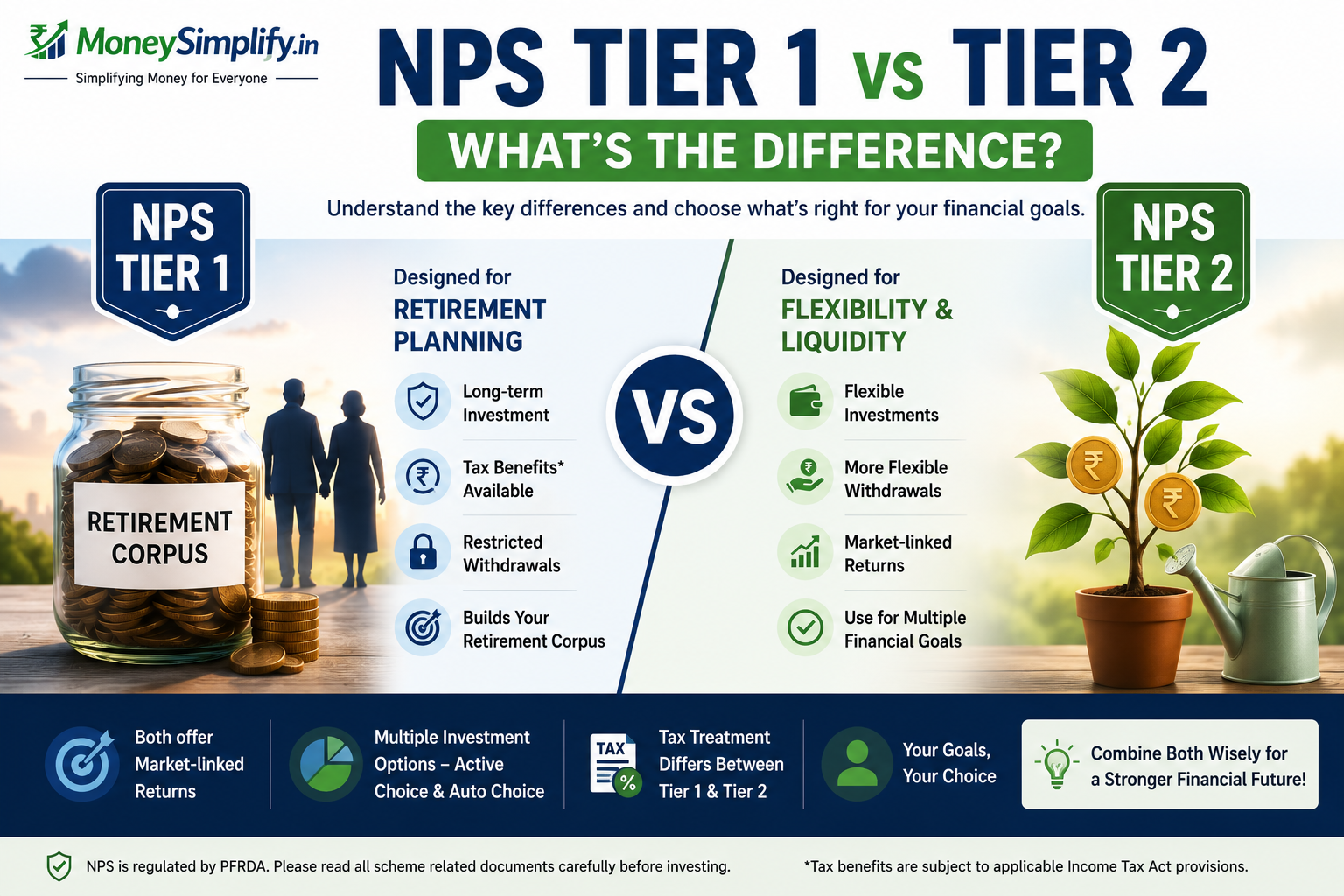

Retirement planning is one of the most important aspects of personal finance, and starting early can make a significant difference in building long-term wealth.
One of the most popular retirement-focused investment options in India is the National Pension System (NPS).
Designed to encourage disciplined retirement savings, NPS helps investors build a retirement corpus through regular contributions while offering potential tax benefits and market-linked growth.
But how does NPS work, who should invest in it, and is it the right choice for you?
In this beginner’s guide, we’ll explain everything you need to know about NPS, including its features, benefits, eligibility, investment options, and important considerations.
What Is NPS?
The National Pension System (NPS) is a government-regulated retirement savings scheme introduced to encourage long-term financial security after retirement.
It allows individuals to invest regularly in a diversified portfolio consisting of different asset classes, depending on the investment option selected.
The primary objective of NPS is to help investors accumulate a retirement corpus that can provide financial support during retirement.
Who Can Invest in NPS?
NPS is available to a wide range of eligible individuals, subject to the prevailing rules and regulations.
It is commonly used by:
- Salaried employees
- Self-employed individuals
- Professionals
- Business owners
Before opening an NPS account, investors should verify the latest eligibility criteria issued by the relevant authorities.
How Does NPS Work?
NPS follows a simple investment process.
- Open an NPS account.
- Make regular contributions.
- Your money is invested according to your selected investment option.
- The investment grows over time based on market performance.
- The accumulated retirement corpus becomes available according to the applicable withdrawal rules.
Since NPS is designed for long-term retirement planning, investors are generally encouraged to stay invested over many years.
Investment Options in NPS
NPS allows investors to choose how their money is allocated.
Active Choice
Under Active Choice, investors decide the allocation among different asset classes within the permitted limits.
This option may be suitable for individuals who are comfortable managing their investment allocation.
Auto Choice
Under Auto Choice, asset allocation changes automatically based on the investor’s age.
This option is generally suitable for beginners or investors who prefer a simpler approach.
Asset Classes in NPS
NPS investments may include:
- Equity
- Corporate bonds
- Government securities
- Other eligible asset classes as permitted under applicable regulations
Diversification across different asset classes helps manage investment risk.
Key Features of NPS
Retirement-Focused Investment
NPS is specifically designed to help investors build long-term retirement savings.
Market-Linked Returns
Unlike fixed-return investments, NPS returns depend on market performance.
Professional Fund Management
Investments are managed by professional pension fund managers approved under the applicable regulatory framework.
Flexible Contributions
Investors can contribute regularly according to the applicable contribution rules.
Tax Benefits
Eligible contributions may qualify for tax benefits under the relevant provisions of the Income Tax Act.
Investors should always verify the latest tax regulations before making investment decisions.
Benefits of Investing in NPS
Long-Term Wealth Creation
Regular investing over several years can help investors build a substantial retirement corpus.
Diversification
NPS invests across multiple asset classes, reducing dependence on a single investment type.
Retirement Planning
NPS encourages disciplined investing for retirement.
Potential Tax Savings
Eligible investors may benefit from tax deductions under applicable tax laws.
Flexibility
Investors can choose between different investment options based on their preferences and financial goals.
Is NPS Safe?
NPS is regulated under a dedicated regulatory framework and investments are managed by authorized pension fund managers.
However, since part of the portfolio may be invested in market-linked assets, investment values can fluctuate over time.
Investors should understand that market-linked investments involve risk and returns are not guaranteed.
In the next section, we’ll discuss withdrawal rules, tax benefits, common mistakes, frequently asked questions, advantages and disadvantages, and help you determine whether NPS is suitable for your retirement goals.
Withdrawal Rules
Since NPS is designed primarily for retirement planning, withdrawals are governed by the applicable rules and regulations.
Investors may be eligible for:
- Partial withdrawals under specified conditions.
- Withdrawal at retirement according to prevailing regulations.
The withdrawal process and taxation may change over time, so investors should always refer to the latest official guidelines before making decisions.
Tax Benefits of NPS
One of the major advantages of NPS is its tax-saving potential.
Eligible contributions may qualify for deductions under the relevant provisions of the Income Tax Act.
In certain cases, additional tax benefits may also be available, subject to prevailing tax regulations.
Investors should consult a qualified tax professional or refer to the latest government notifications for updated tax rules.
Advantages of NPS
Encourages Retirement Planning
NPS helps investors build a dedicated retirement corpus through disciplined long-term investing.
Diversified Investment Portfolio
Investments are spread across multiple asset classes, reducing concentration risk.
Professional Fund Management
The investment portfolio is managed by professional pension fund managers.
Potential for Long-Term Growth
Since NPS includes market-linked investments, it offers the potential for long-term capital appreciation.
Tax Benefits
Eligible investors may receive tax benefits under applicable provisions.
Limitations of NPS
Like every investment, NPS also has certain limitations.
Market Risk
Returns are not guaranteed because part of the investment is linked to financial markets.
Long-Term Commitment
NPS is intended for retirement, making it less suitable for investors seeking short-term liquidity.
Withdrawal Restrictions
Withdrawals are subject to applicable rules and conditions.
Common Mistakes to Avoid
Starting Retirement Planning Late
The earlier you begin investing, the longer your money has to grow through compounding and disciplined investing.
Ignoring Asset Allocation
Choosing an investment allocation without understanding risk can affect long-term returns.
Review your allocation periodically to ensure it aligns with your financial goals.
Investing Without Understanding the Scheme
Before investing, understand:
- Investment options
- Risk level
- Withdrawal rules
- Tax benefits
Not Reviewing Your Portfolio
Financial goals change over time.
Reviewing your retirement investments regularly can help keep your financial plan on track.
Frequently Asked Questions (FAQs)
Is NPS a good investment?
NPS may be a suitable investment for individuals seeking long-term retirement planning with market-linked growth potential.
However, suitability depends on your financial goals and risk tolerance.
Can salaried and self-employed individuals invest in NPS?
Yes.
Subject to eligibility criteria and prevailing regulations, both salaried and self-employed individuals can open an NPS account.
Is NPS better than PPF?
NPS and PPF serve different purposes.
NPS focuses on retirement investing with market-linked returns, while PPF offers government-backed long-term savings.
The better option depends on your investment objectives.
Can I invest in both NPS and PPF?
Yes.
Many investors include both NPS and PPF in their retirement portfolio to balance growth potential and stability.
Does NPS guarantee returns?
No.
NPS is a market-linked investment, and returns depend on the performance of the underlying assets.
Who Should Consider NPS?
NPS may be suitable for individuals who:
✓ Want to build a retirement corpus.
✓ Have a long investment horizon.
✓ Are comfortable with market-linked investments.
✓ Want a diversified retirement portfolio.
✓ Wish to take advantage of eligible tax benefits.
Final Verdict
The National Pension System (NPS) is one of India’s most popular retirement-focused investment options.
Its combination of professional fund management, diversified investments, market-linked growth potential, and tax benefits makes it an attractive choice for long-term investors.
However, because NPS is designed primarily for retirement and includes market-related risk, investors should evaluate whether it aligns with their financial goals, investment horizon, and risk tolerance before investing.
Conclusion
Retirement planning is not something that should be postponed.
Starting early gives your investments more time to grow and helps you build financial security for the future.
The National Pension System offers a structured way to invest for retirement while providing diversification, professional management, and potential tax benefits.
Before investing, compare NPS with other long-term investment options such as PPF and evaluate how it fits into your overall financial plan.
Disclaimer: This article is for educational purposes only and should not be considered financial, investment, or tax advice. Investment returns, tax benefits, withdrawal rules, and regulations may change over time. Please consult a qualified financial advisor or tax professional before making investment decisions.