If you’re planning for retirement, you’ve probably heard about the National Pension System (NPS).
Many people know that NPS is a retirement-focused investment scheme, but they are often unsure about how it actually works.
Questions such as:
- How is money invested?
- Who manages the investments?
- How do returns grow?
- What happens after retirement?
are common among new investors.
Understanding how NPS works can help you make informed financial decisions and determine whether it fits your long-term retirement goals.
In this guide, we’ll explain the complete working of NPS in simple language—from opening an account to investing, portfolio allocation, fund management, returns, and retirement withdrawals.
What Is NPS?
The National Pension System (NPS) is a government-regulated retirement savings scheme designed to help individuals build a retirement corpus through regular investments.
Unlike traditional fixed-return savings schemes, NPS invests in market-linked assets with the objective of generating long-term wealth for retirement.
How Does NPS Work?
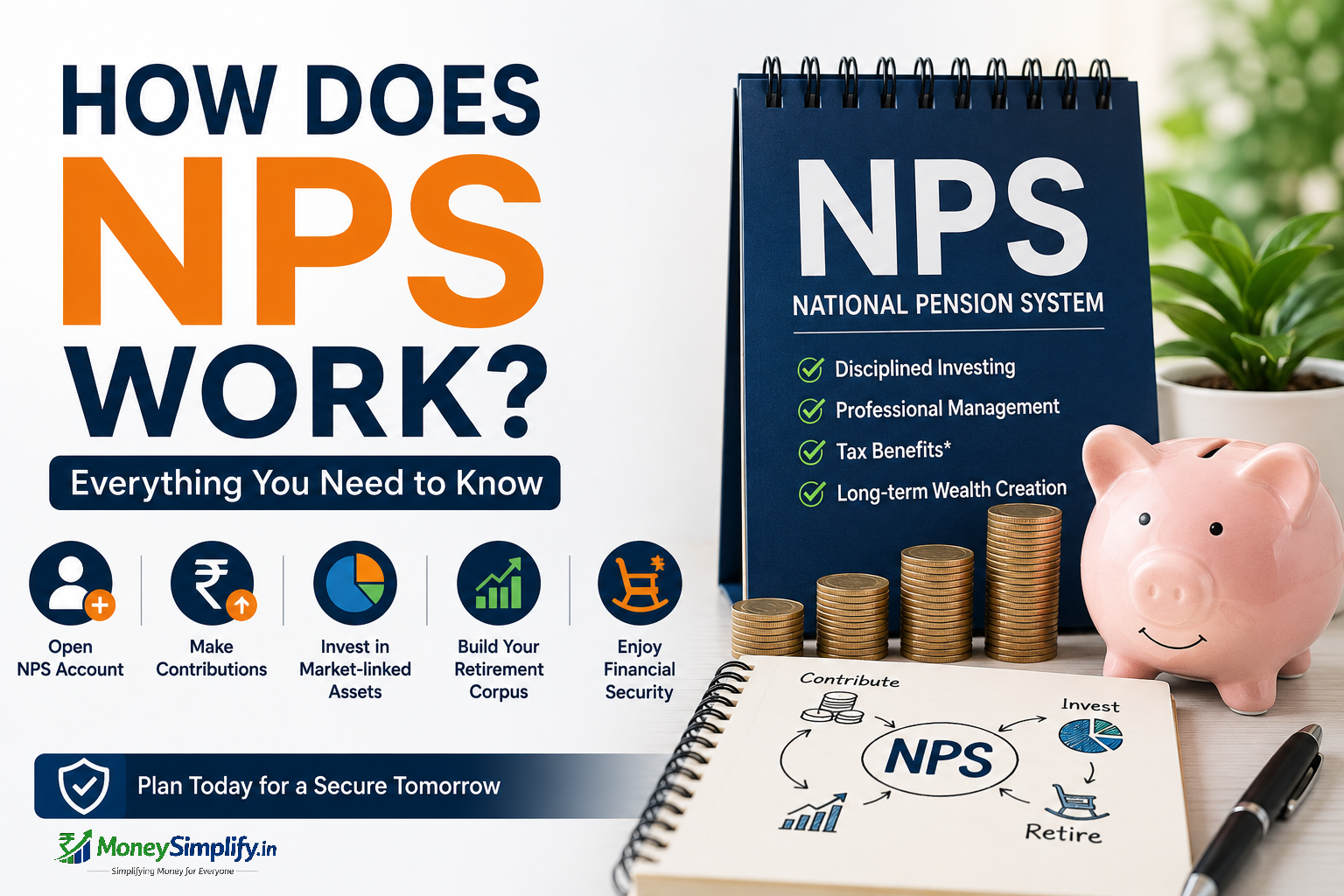
The NPS investment process follows a structured approach.
Step 1: Open an NPS Account
The first step is opening an NPS account through an authorized Point of Presence (PoP) or other approved channels, subject to the prevailing regulations.
After completing the required formalities, investors receive a Permanent Retirement Account Number (PRAN).
The PRAN serves as the unique identification number for the NPS account.
Step 2: Make Contributions
After opening the account, investors contribute money according to the applicable contribution rules.
Contributions can be made periodically to build a retirement corpus over time.
Regular investing encourages disciplined retirement planning.
Step 3: Choose Your Investment Option
NPS allows investors to choose between two investment approaches.
Active Choice
Under Active Choice, investors decide how their investments are allocated among the available asset classes within the permitted limits.
This option may be suitable for investors who understand asset allocation and wish to manage their portfolio more actively.
Auto Choice
Under Auto Choice, the asset allocation changes automatically according to the investor’s age under the applicable lifecycle model.
This option is generally preferred by investors seeking a simpler, professionally managed approach.
Where Does Your Money Get Invested?
Depending on your chosen allocation, NPS investments may be allocated across:
- Equity
- Corporate bonds
- Government securities
- Other eligible asset classes permitted under applicable regulations
Diversification across multiple asset classes helps reduce concentration risk.
Who Manages NPS Investments?
NPS investments are managed by professional pension fund managers appointed under the applicable regulatory framework.
These fund managers invest the portfolio according to the selected investment option and regulatory guidelines.
Professional management helps ensure that investments are handled systematically.
How Are Returns Generated?
Unlike fixed-interest investment products, NPS returns depend on the performance of the underlying investments.
Returns may be influenced by:
- Equity market performance
- Bond market performance
- Asset allocation
- Market conditions
Since NPS is a market-linked investment, returns are not guaranteed.
What Is a Retirement Corpus?
The retirement corpus is the total amount accumulated through:
- Regular contributions
- Investment growth
- Compounding over time
The longer you remain invested, the greater the opportunity for long-term wealth accumulation, although returns are subject to market performance.
Why Is Long-Term Investing Important?
NPS is designed primarily for retirement.
Long investment periods provide more time for investments to potentially benefit from market growth and the effects of compounding.
Investors should avoid making decisions based solely on short-term market fluctuations.
In the next section, we’ll explain withdrawal rules, tax benefits, advantages, common mistakes, frequently asked questions, and help you understand whether NPS is suitable for your retirement strategy.
Withdrawal Rules
Since NPS is designed primarily for retirement planning, withdrawals are governed by the applicable rules and regulations.
Investors may be eligible for:
- Partial withdrawals under specified conditions.
- Withdrawal at retirement according to the prevailing NPS guidelines.
As withdrawal rules may change over time, investors should always refer to the latest official regulations before making financial decisions.
Tax Benefits of NPS
One of the major advantages of investing in NPS is the availability of tax benefits.
Eligible contributions may qualify for deductions under the relevant provisions of the Income Tax Act.
In certain cases, additional tax benefits may also be available, subject to the prevailing tax rules.
Before investing, always verify the latest tax provisions or consult a qualified tax professional.
Advantages of NPS
Encourages Disciplined Retirement Planning
NPS promotes regular investing over the long term, helping individuals build a retirement corpus gradually.
Diversified Investment Portfolio
Investments are allocated across multiple asset classes, helping reduce concentration risk.
Professional Fund Management
Qualified pension fund managers manage investments according to the selected investment option and applicable regulatory guidelines.
Market-Linked Growth Potential
Because NPS invests in market-linked assets, investors have the opportunity to benefit from long-term market growth.
Potential Tax Benefits
Eligible investors may receive tax benefits under the applicable provisions of the Income Tax Act.
Limitations of NPS
Like every investment option, NPS has certain limitations.
Market Risk
Investment returns depend on market performance and are not guaranteed.
Long-Term Investment
NPS is primarily intended for retirement, making it less suitable for short-term financial goals.
Withdrawal Restrictions
Withdrawals are governed by applicable rules and regulations.
Investors should understand these conditions before investing.
Common Mistakes to Avoid
Starting Retirement Planning Late
Delaying retirement investing reduces the potential benefits of long-term compounding.
Starting early allows investments more time to grow.
Ignoring Asset Allocation
Choosing an unsuitable asset allocation may affect long-term investment performance.
Review your portfolio periodically to ensure it continues to match your financial goals and risk tolerance.
Expecting Guaranteed Returns
NPS is a market-linked investment.
Returns depend on the performance of the underlying assets and cannot be guaranteed.
Not Reviewing Your Investments
Your financial circumstances and retirement goals may change over time.
Reviewing your investments regularly helps ensure they remain aligned with your long-term objectives.
Frequently Asked Questions (FAQs)
Is NPS a good retirement investment?
NPS may be suitable for individuals seeking long-term retirement planning with market-linked growth and potential tax benefits.
The suitability depends on your financial goals and risk profile.
Who manages NPS investments?
NPS investments are managed by professional pension fund managers authorized under the applicable regulatory framework.
Can I change my investment option?
Subject to the prevailing NPS rules, eligible investors may have the option to modify their investment preferences.
Always verify the latest guidelines before making changes.
Are NPS returns guaranteed?
No.
Since NPS invests in market-linked assets, returns depend on market performance and are not guaranteed.
Can I invest in both NPS and PPF?
Yes.
Many investors include both NPS and PPF in their long-term financial plan to achieve a balance between growth potential and stability.
Final Verdict
The National Pension System follows a structured investment process that combines disciplined contributions, professional fund management, diversified investments, and long-term wealth creation.
By understanding how NPS works—from opening an account to selecting investment options and building a retirement corpus—investors can make informed decisions that align with their retirement objectives.
Conclusion
Understanding how NPS works is essential before investing for retirement.
From choosing between Active Choice and Auto Choice to understanding contributions, asset allocation, fund management, returns, and withdrawals, every stage plays an important role in long-term retirement planning.
Before investing, evaluate your financial goals, investment horizon, and risk tolerance to determine whether NPS is the right retirement solution for your needs.
Disclaimer: This article is for educational purposes only and should not be considered financial, investment, or tax advice. NPS rules, tax benefits, withdrawal conditions, and regulations may change over time. Always refer to the latest official guidelines or consult a qualified financial advisor before making investment decisions.