
If you’ve ever looked for ways to save income tax in India, you’ve probably heard about Section 80C.
Section 80C is one of the most popular tax-saving provisions available to taxpayers. It allows eligible individuals to reduce their taxable income by investing in specified financial products and making certain eligible expenses.
For many salaried employees and investors, Section 80C is the starting point of tax planning.
But what exactly is Section 80C? How much tax can you save? Which investments qualify for deductions? And how can beginners use it effectively?
In this guide, we’ll explain everything you need to know about Section 80C in simple language.
What Is Section 80C?
Section 80C is a provision under the Income Tax Act, 1961, that allows eligible taxpayers to claim deductions from their taxable income for certain investments and expenses.
The primary objective of Section 80C is to encourage:
- Savings
- Investments
- Retirement planning
- Long-term wealth creation
By investing in eligible instruments, taxpayers can reduce their taxable income and potentially lower their tax liability.
What Is the Maximum Deduction Under Section 80C?
The maximum deduction available under Section 80C is:
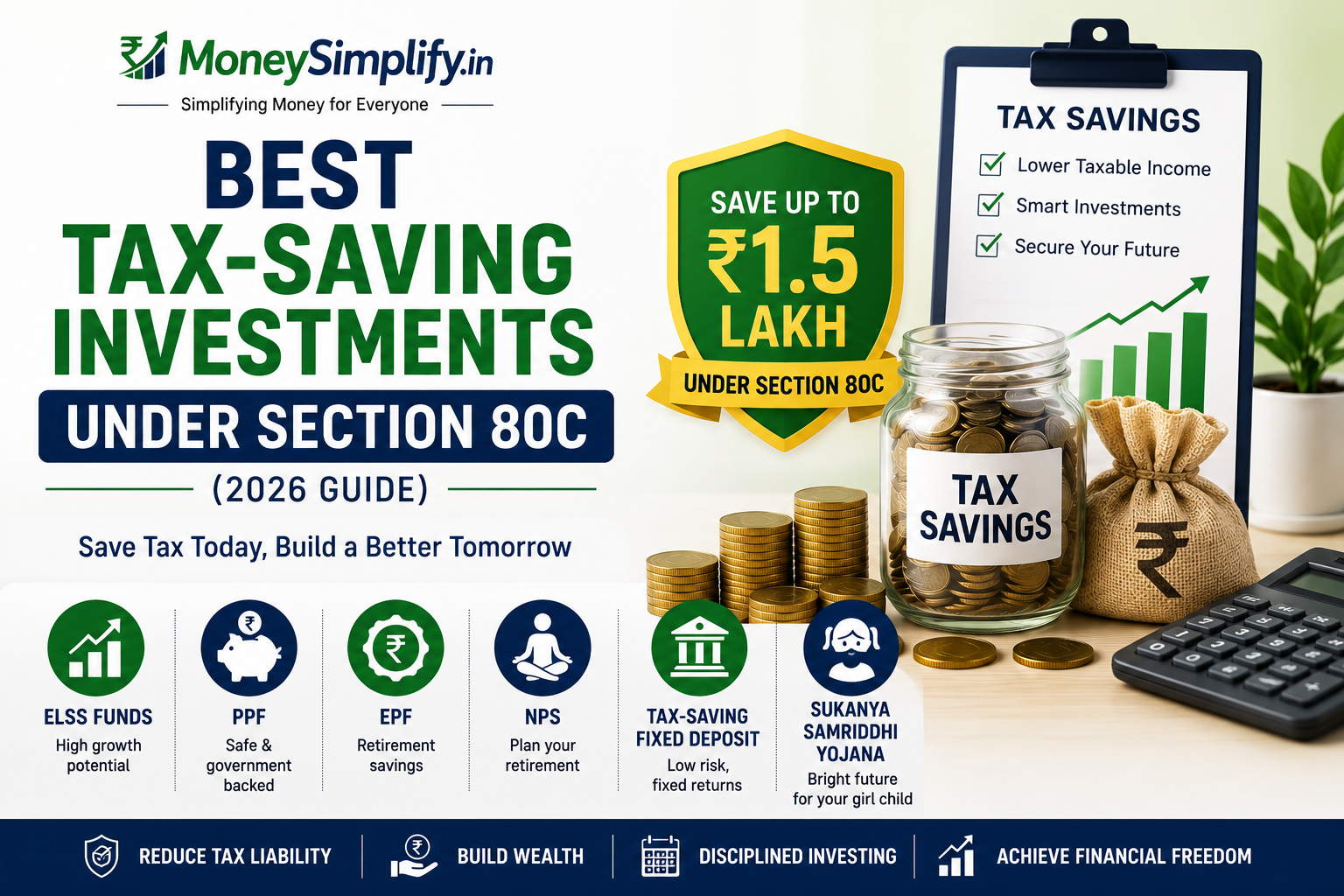
₹1.5 lakh per financial yearThis means that investments and eligible expenses up to ₹1.5 lakh can be considered for deduction under the applicable tax rules.
However, the actual tax savings depend on:
- Taxable income
- Applicable tax slab
- Tax regime chosen by the taxpayer
Who Can Claim Section 80C Benefits?
Section 80C benefits are generally available to:
✓ Salaried employees
✓ Self-employed individuals
✓ Hindu Undivided Families (HUFs)
The eligibility rules may vary depending on the specific investment or deduction being claimed.
Why Is Section 80C Important?
Section 80C helps taxpayers achieve two goals simultaneously:
Tax Saving
It reduces taxable income.
Wealth Creation
Many eligible investments help build long-term financial security.
Instead of viewing tax planning as a burden, investors can use Section 80C as an opportunity to strengthen their financial future.
Eligible Investments Under Section 80C
Several investment options qualify for deductions under Section 80C.
1. ELSS Funds
Equity Linked Savings Scheme (ELSS) is a tax-saving mutual fund that qualifies for Section 80C deductions.
Key features:
- Equity market exposure
- Potential for long-term growth
- Three-year lock-in period
ELSS is often preferred by investors seeking both tax benefits and wealth creation opportunities.
2. Public Provident Fund (PPF)
PPF is a government-backed savings scheme.
Features include:
- Long-term savings
- Government-backed security
- Tax benefits
PPF is commonly chosen by conservative investors.
3. Tax-Saving Fixed Deposits
Banks offer tax-saving fixed deposits with a mandatory lock-in period.
These deposits provide fixed returns and qualify for deductions under Section 80C.
4. National Pension System (NPS)
Although NPS has additional tax provisions beyond Section 80C, certain contributions may qualify under applicable tax rules.
NPS is designed primarily for retirement planning.
5. Employee Provident Fund (EPF)
EPF contributions made by salaried employees may qualify for deductions under Section 80C.
Many employees automatically benefit through payroll deductions.
6. Sukanya Samriddhi Yojana (SSY)
This government-backed scheme is designed to support the future financial needs of a girl child.
Eligible contributions qualify under Section 80C.
Eligible Expenses Under Section 80C
Section 80C is not limited to investments.
Certain expenses may also qualify.
Tuition Fees
Tuition fees paid for eligible educational institutions may qualify for deductions under applicable rules.
Home Loan Principal Repayment
The principal component of a home loan repayment may qualify for deductions under Section 80C.
Many homeowners use this benefit as part of their tax planning strategy.
How Does Section 80C Help Reduce Tax?
Let’s understand with a simple example.
Suppose:
- Annual taxable income = ₹8 lakh
- Eligible Section 80C investments = ₹1.5 lakh
Taxable income may be reduced to:
₹6.5 lakhsubject to applicable tax rules and eligibility conditions.
This reduction may lower the overall tax liability depending on the taxpayer’s income slab.
Old Tax Regime vs New Tax Regime
Understanding the tax regime is important.
Old Tax Regime
The old tax regime allows taxpayers to claim deductions under Section 80C.
New Tax Regime
The new tax regime offers lower tax rates but generally does not provide many deductions available under the old regime.
Taxpayers should compare both regimes carefully before making a decision.
Common Mistakes People Make
Many taxpayers fail to maximize their Section 80C benefits.
Common mistakes include:
Waiting Until the Last Minute
Investing only at the end of the financial year can lead to rushed decisions.
Choosing Investments Only for Tax Saving
Tax-saving should not be the only consideration.
Investments should align with:
- Financial goals
- Risk tolerance
- Investment horizon
Ignoring Diversification
Putting all investments into a single product may increase concentration risk.
A diversified approach is often more balanced.
Benefits of Section 80C
Section 80C offers several advantages:
✓ Reduces taxable income.
✓ Encourages disciplined investing.
✓ Supports retirement planning.
✓ Helps build long-term wealth.
✓ Provides access to multiple investment options.
✓ Promotes financial planning habits.
In Part 2, we’ll cover how to choose the right Section 80C investments, compare popular options, answer frequently asked questions, and help you decide which tax-saving strategy may be best for your financial goals.
How to Choose the Right Section 80C Investment
One of the biggest advantages of Section 80C is the variety of investment options available.
However, choosing the right option depends on your financial situation, goals, and risk appetite.
For Conservative Investors
Investors seeking stability may prefer:
- Public Provident Fund (PPF)
- Tax-Saving Fixed Deposits
- Employee Provident Fund (EPF)
These options generally provide greater predictability and lower risk.
For Growth-Oriented Investors
Investors willing to accept market fluctuations may consider:
- ELSS Funds
- National Pension System (NPS)
These investments offer the potential for long-term wealth creation but involve varying levels of market risk.
For Retirement Planning
Investors focused on retirement goals may benefit from:
- EPF
- PPF
- NPS
These instruments encourage long-term disciplined investing.
Comparison of Popular Section 80C Investments
| Investment | Lock-In Period | Risk Level | Return Type |
|---|---|---|---|
| ELSS Funds | 3 Years | Moderate to High | Market-Linked |
| PPF | 15 Years | Low | Government-Declared |
| Tax-Saving FD | 5 Years | Low | Fixed Returns |
| EPF | Until Retirement/Withdrawal Rules | Low | Government-Declared |
| NPS | Long-Term | Moderate | Market-Linked |
Every investment has advantages and limitations.
The best choice depends on individual financial goals rather than solely on tax savings.
Is Section 80C Available Under the New Tax Regime?
This is one of the most common questions among taxpayers.
Under the Old Tax Regime
Taxpayers can generally claim deductions under Section 80C subject to applicable limits and conditions.
Under the New Tax Regime
Most Section 80C deductions are not available under the standard new tax regime structure.
As tax laws may change over time, taxpayers should always review the latest government notifications and tax guidelines.
Should You Invest the Full ₹1.5 Lakh?
Many taxpayers aim to utilize the full Section 80C deduction limit.
However, this should not be done blindly.
Before investing, consider:
- Emergency fund requirements
- Existing financial commitments
- Insurance needs
- Retirement goals
- Overall investment strategy
Tax-saving should support financial planning—not replace it.
Common Tax Planning Tips
Start Early
Instead of waiting until March, consider investing throughout the year.
This can help:
- Reduce financial stress
- Improve investment discipline
- Enable SIP-based investing
Match Investments With Goals
Different investment options serve different purposes.
For example:
- PPF may support long-term savings.
- ELSS may support wealth creation.
- NPS may support retirement planning.
Review Your Portfolio Regularly
Financial goals and tax rules can change over time.
Periodic reviews help ensure that investments remain aligned with your objectives.
Avoid Investing Solely for Tax Benefits
A tax-saving investment that does not suit your financial goals may not be the right choice.
Always evaluate both:
- Tax efficiency
- Investment suitability
Frequently Asked Questions (FAQs)
What is the maximum deduction available under Section 80C?
The maximum deduction is:
₹1.5 lakh per financial yearsubject to applicable tax laws and eligibility conditions.
Is ELSS covered under Section 80C?
Yes.
ELSS funds are eligible for tax deductions under Section 80C and are among the most popular tax-saving investment options.
Can I claim both EPF and PPF under Section 80C?
Eligible contributions to EPF and PPF may be considered under the overall Section 80C deduction limit, subject to applicable rules.
Is life insurance covered under Section 80C?
Certain life insurance premium payments may qualify under Section 80C if eligibility conditions are met.
Which Section 80C investment has the shortest lock-in period?
Among major tax-saving investment options:
ELSS Funds – 3 Yearshave the shortest lock-in period.
Can salaried employees claim Section 80C benefits?
Yes.
Eligible salaried employees may claim deductions under Section 80C subject to applicable rules and documentation requirements.
Advantages of Section 80C
✓ Reduces taxable income.
✓ Encourages disciplined savings.
✓ Supports long-term financial planning.
✓ Provides multiple investment choices.
✓ Helps build retirement wealth.
✓ Promotes financial awareness.
Limitations of Section 80C
✗ Deduction limit capped at ₹1.5 lakh.
✗ Some investments have long lock-in periods.
✗ Certain benefits may not be available under the new tax regime.
✗ Tax-saving investments may carry market risk depending on the product selected.
Final Verdict
Section 80C remains one of the most valuable tax-saving provisions available to Indian taxpayers.
It not only helps reduce taxable income but also encourages individuals to invest for important financial goals such as:
- Wealth creation
- Retirement planning
- Child education
- Long-term financial security
By understanding the available options and selecting investments that match your financial goals, Section 80C can become an effective tool for both tax efficiency and wealth building.
Conclusion
For beginners, Section 80C is often the first step toward structured financial planning.
Whether you choose ELSS funds, PPF, EPF, NPS, tax-saving fixed deposits, or a combination of investments, the key is to align your decisions with your risk tolerance and long-term objectives.
Remember that successful tax planning is not about avoiding taxes—it is about making smarter financial decisions that support your future goals.
Disclaimer: This article is for educational purposes only and should not be considered tax, financial, or investment advice. Tax laws, regulations, and deduction limits may change over time. Please consult a qualified tax professional or financial advisor before making investment decisions.